How to Source High Quality Vitamin C Coated Products?
Sourcing high-quality Vitamin C coated products can be challenging. The market is saturated with options, making it vital to choose wisely. Vitamin C, known for its antioxidant properties, offers numerous health benefits. However, not all products meet the same standards.
When assessing these products, consider their formulation. A reliable source should provide transparency about ingredient sourcing, production methods, and quality control measures. Take note of any certifications or lab testing results that showcase their reliability. Moreover, customer reviews can provide insight into the effectiveness of the Vitamin C coated products.
Be aware of potential inconsistencies across different brands. Some might present themselves as premium without proof. It's essential to remain vigilant and conduct thorough research. Ultimately, the goal is to ensure that the Vitamin C coated products you choose deliver on their promises. This journey requires careful consideration and an open mind to analyze the information available.
Understanding the Importance of High Quality Vitamin C in Products
Vitamin C has gained significant attention in recent years. It is an essential nutrient found in many cosmetic products. Its inclusion often indicates a product's efficacy. Studies show that vitamin C effectively brightens skin and reduces signs of aging. According to a report by the Journal of Clinical and Aesthetic Dermatology, topical vitamin C can improve hydration and enhance collagen production. This makes high-quality vitamin C crucial in skincare formulations.
When looking to source high-quality vitamin C, it’s important to consider its stability. Many formulations degrade quickly if not used correctly. Research indicates that only products with stable forms of vitamin C can provide lasting benefits. For instance, L-ascorbic acid is often regarded as the most potent form. However, it requires careful handling to maintain its effectiveness. Manufacturers must focus on proper storage and delivery methods to ensure the product remains active.
Furthermore, not all vitamin C products are created equal. Quality can vary widely among suppliers. A recent industry analysis highlighted that nearly 40% of vitamin C formulations tested did not meet claimed potency levels. This inconsistency can lead to consumer distrust. It emphasizes the need for thorough testing and transparency in sourcing practices. Understanding these nuances is key to ensuring that products meet high standards for safety and effectiveness.
How to Source High Quality Vitamin C Coated Products?
| Product Name |
Vitamin C Content (mg) |
Coating Type |
Source Quality |
Certificate |
| Vitamin C Tablet A |
500 |
Enteric Coated |
High |
GMP Certified |
| Vitamin C Powder B |
1000 |
Natural Coating |
Medium |
ISO Certified |
| Vitamin C Effervescent C |
250 |
No Coating |
High |
Non-GMO Verified |
| Vitamin C Chewable D |
500 |
Sugar Coated |
Medium |
Halal Certified |
Identifying Reliable Suppliers for Vitamin C Coated Products
Finding reliable suppliers for vitamin C coated products can be challenging. Start by exploring
industry-specific directories and trade shows. These events often feature trustworthy suppliers
who specialize in health and nutrition products. Attending these gatherings allows you to ask direct questions and gauge their expertise.
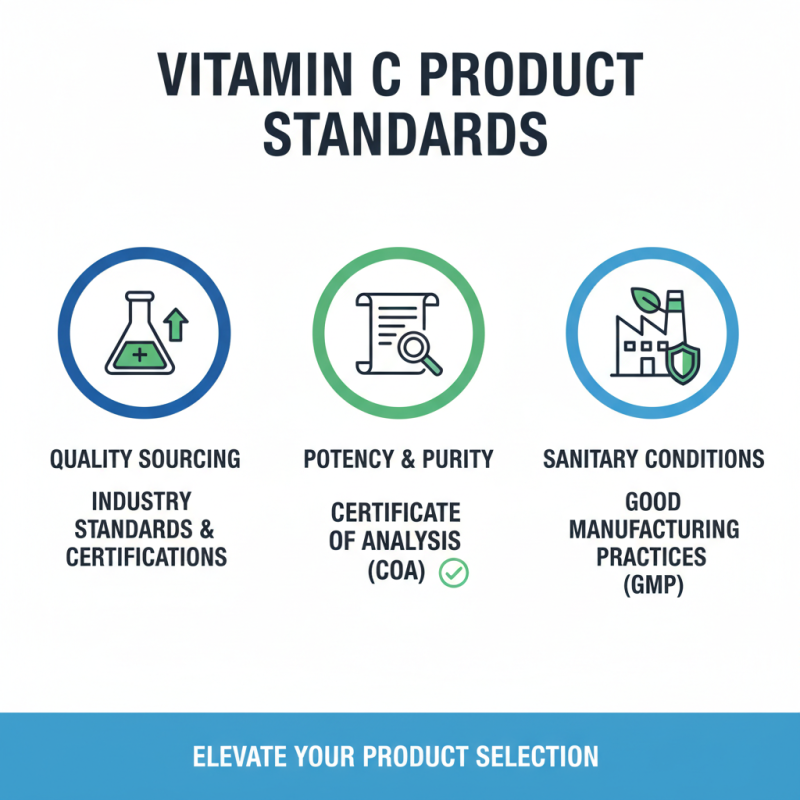
Once you identify potential suppliers, evaluate their certifications. Look for GMP (Good Manufacturing Practice)
and ISO (International Organization for Standardization) certifications. These credentials indicate a commitment to quality and safety standards.
Additionally, you can request samples to assess product quality. Observe the appearance, texture, and scent. These factors often highlight
a supplier's attention to detail.
It's important to conduct background checks on suppliers. Read reviews and testimonials from other customers. Sometimes, a supplier's
website may not reflect their actual performance. Be prepared for inconsistencies. If possible, visit their facilities. This
hands-on approach can provide more insight into their operations.
Building a relationship with suppliers takes time and effort, but it’s crucial for sourcing high-quality products.
Key Quality Indicators for Vitamin C Coated Ingredients
When sourcing high-quality vitamin C coated products, several key quality indicators emerge.
Vitamin C is sensitive to light, heat, and air. Coating it effectively can enhance its stability.
A study published in the Journal of Nutritional Science shows that coated vitamin C can retain potency longer, improving shelf life.
One vital aspect is the coating material used. Common coatings include maltodextrin and modified starch. Research indicates that coatings made from these materials can provide better protection against oxidation.
Testing should ensure that the coating thickness is adequate. If it's too thin, the core ingredient may degrade quickly. Documented data shows that a thickness of 30-40 micrometers can yield optimal results, based on industry benchmarks.
Another factor is the source of the vitamin C itself. Quality varies significantly. Reports suggest that L-ascorbic acid derived from reputable suppliers offers better efficacy. The purity level should be above 95%. Testing for impurities is essential. Some batches may contain harmful residues.
Awareness of these indicators will guide manufacturers in sourcing reliable vitamin C coated products. It's a responsibility to ensure quality for consumers.
Evaluating the Stability and Efficacy of Vitamin C Coatings
Vitamin C coatings are vital for enhancing the stability and efficacy of vitamin C products. A significant amount of pure vitamin C can degrade quickly when exposed to light, air, or heat. Industry studies show that up to 60% of vitamin C can lose potency within six months if not properly stabilized. This degradation leads to reduced effectiveness, making it essential to evaluate the quality of vitamin C coatings used in formulations.
To assess the stability of vitamin C-coated products, one should look for independent lab results. These results often indicate how well a product maintains its potency over time. Prioritize formulations that have undergone rigorous testing, showcasing their ability to withstand environmental stressors. Attention to pH levels is another factor; optimal levels can enhance the stability of vitamin C.
Tips: Look for products packaged in opaque containers to minimize light exposure. Also, ensure they come with airtight seals to limit oxidation. Investing in high-quality vitamin C coatings not only enhances stability but also ensures you receive the full benefits associated with vitamin C, like its antioxidant properties. However, not all products claiming stability live up to that promise. Always verify claims made in marketing materials.
Stability and Efficacy of Vitamin C Coated Products