How to Choose the Right Vitamin B Complex for Your Health?
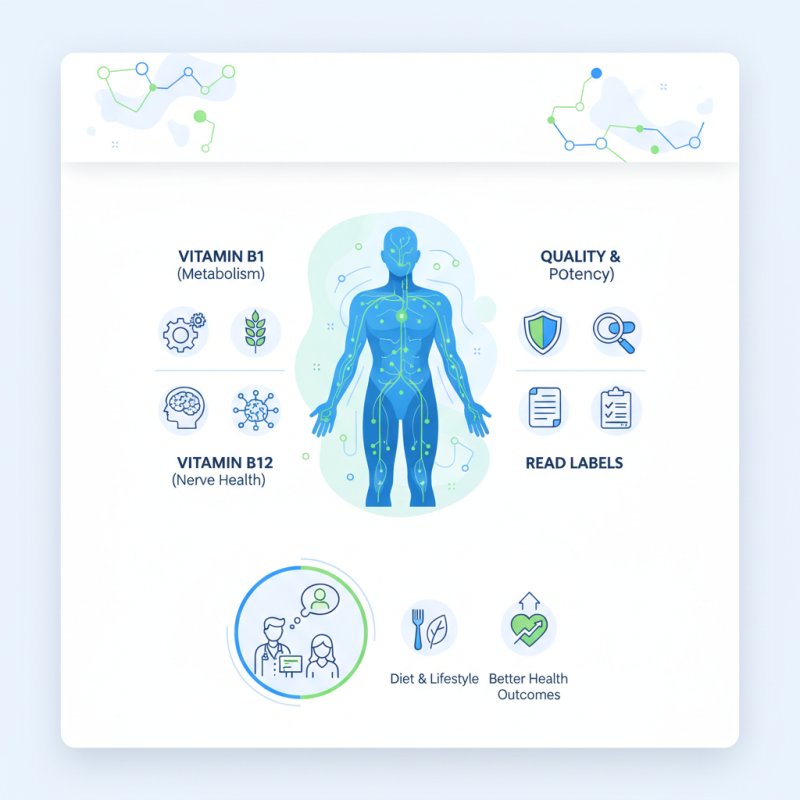
Choosing the right Vitamin B Complex can be challenging due to the variety of options available. Each B vitamin plays a unique role in your body. For example, Vitamin B1 supports metabolism, while Vitamin B12 is crucial for nerve health. Understanding these differences is essential for selecting the best supplement for your needs.
Some people may assume all Vitamin B Complexes are the same. However, this is not true. The quality and potency can vary significantly among brands. It's vital to read labels carefully. Look for reputable brands that list ingredient sources transparently. This helps ensure you receive effective doses of each vitamin.
Consulting with a healthcare professional can also enhance your choices. They can guide you based on your individual health conditions and dietary needs. Personalization is key. Reflecting on your diet and lifestyle may reveal gaps that a Vitamin B Complex could fill. Ultimately, informed choices lead to better health outcomes.
Understanding Vitamin B Complex: Types and Their Health Benefits
Vitamin B complex includes several essential vitamins that play vital roles in maintaining our health. These vitamins, such as B1, B2, B3, B5, B6, B7, B9, and B12, work together to support our metabolism, energy production, and nervous system function. Each type offers unique benefits. For example, B12 is key for red blood cell formation, while B6 aids in brain development and function.
When choosing a vitamin B complex, consider your specific health needs. For instance, if you're feeling fatigued, look for a complex rich in B12 and B6. Vegetarians and vegans may require extra B12, as it's primarily found in animal products. Consulting a healthcare professional can provide personalized advice on dosage and selection.
**Tips**: Always check the label for ingredients and dosages. Look for third-party testing for quality assurance. Remember, taking more isn't always better. Overconsumption can lead to adverse effects. Keep a journal to track your energy levels and overall health when trying new supplements.
How to Choose the Right Vitamin B Complex for Your Health?
| Vitamin B Type |
Primary Benefits |
Food Sources |
Recommended Daily Allowance (RDA) |
| B1 (Thiamine) |
Energy metabolism, nerve function |
Whole grains, pork, legumes |
1.1 mg (Women), 1.2 mg (Men) |
| B2 (Riboflavin) |
Antioxidant, energy production |
Milk, eggs, green vegetables |
1.1 mg (Women), 1.3 mg (Men) |
| B3 (Niacin) |
DNA repair, cholesterol management |
Meat, fish, grains |
14 mg (Women), 16 mg (Men) |
| B5 (Pantothenic Acid) |
Fatty acid synthesis, hormone production |
Chicken, beef, potatoes |
5 mg |
| B6 (Pyridoxine) |
Amino acid metabolism, immune function |
Fish, potatoes, chickpeas |
1.3 mg (Adults) |
| B7 (Biotin) |
Fatty acid metabolism, hair, and skin health |
Eggs, almonds, spinach |
30 mcg |
| B9 (Folate) |
DNA synthesis, red blood cell formation |
Leafy greens, beans, citrus fruits |
400 mcg (Adults) |
| B12 (Cobalamin) |
Nerve function, red blood cell production |
Meat, fish, dairy products |
2.4 mcg (Adults) |
Assessing Your Dietary Needs for Vitamin B Complex Intake
When assessing your dietary needs for Vitamin B Complex intake, consider your lifestyle and eating habits. Each B vitamin serves specific roles in your body. For example, B12 supports nerve health, while B6 aids in protein metabolism. It's important to be aware of these functions to ensure you meet your health goals.
Tips: Keep a food diary. Track what you eat daily. This can reveal if you miss essential nutrients. If you often skip meals or rely on processed foods, your intake may lack variety. Consider whole foods like legumes, grains, and leafy greens for a natural source of B vitamins.
Additionally, certain conditions can affect absorption. Vegetarians and older adults may have higher needs for B12. Consult a healthcare professional to evaluate your specific needs. This approach can enhance your overall well-being and help prevent deficiencies.
Tips: Don't hesitate to ask for lab tests. They can provide insights into your vitamin levels. Understanding these details can help tailor your Vitamin B Complex intake effectively.
Key Factors to Consider When Choosing a Vitamin B Supplement
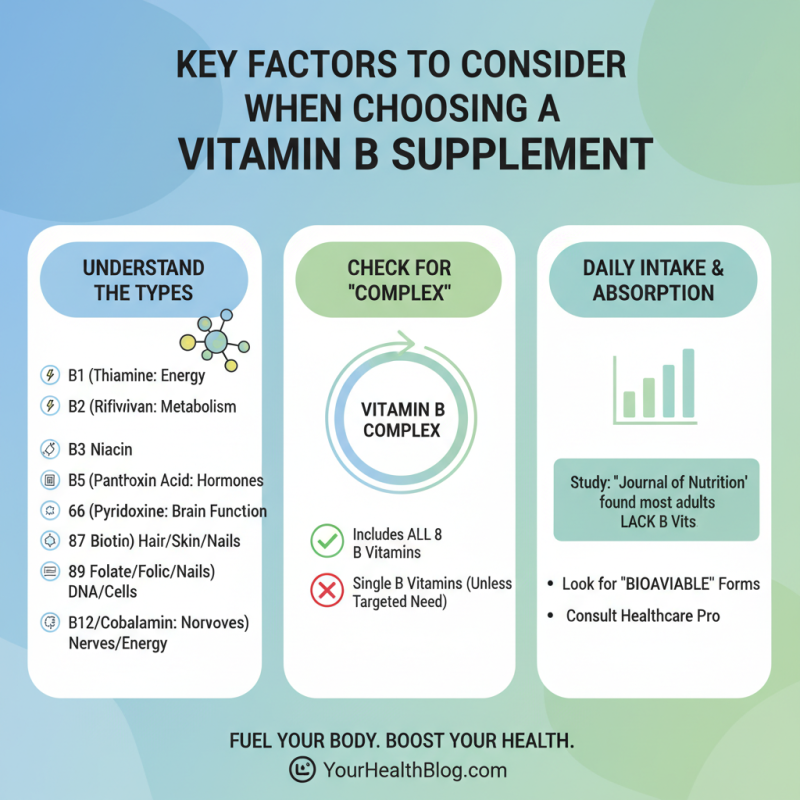
When selecting a Vitamin B complex, it’s essential to understand the different types. Vitamin B consists of several vitamins that play unique roles in the body. B1, B2, B3, B5, B6, B7, B9, and B12 have varying benefits, from energy metabolism to nerve function. According to a study published in the "Journal of Nutrition," most adults do not meet the recommended daily intake for several B vitamins. This highlights the importance of choosing the right supplement.
Consider the specific purpose of your supplement. For energy support, B12 might be crucial. If you focus on cellular health, B9 (folate) is vital. Data indicates that a B-complex supplement can help alleviate fatigue in those deficient in B vitamins. However, it’s also critical to assess quality. Look for products that undergo third-party testing. This ensures they meet safety and efficacy standards.
Dosage is another vital factor. Higher doesn't always equal better. Some people may need larger amounts due to health conditions. Always consult a healthcare professional before starting any supplement. Too much of certain B vitamins, like B6, may lead to nerve damage. The balance of nutrients is a nuanced subject that requires careful thought. Regularly reviewing your vitamin needs is a good practice for managing your health.
The Role of Bioavailability in Vitamin B Complex Absorption
Bioavailability is crucial when selecting the right Vitamin B Complex. It refers to how well nutrients are absorbed in the body. Not all vitamin forms have the same absorption rate. For instance, some B vitamins are better utilized when taken in certain food forms or with other nutrients. Understanding this can significantly improve your health outcomes.
Look for B complex supplements that feature bioenhanced nutrients. They might be more effective than standard versions. Additionally, consider the source of these vitamins. Natural sources, like organic whole foods, can offer better absorption compared to synthetic ones. You might notice differences in energy levels and mood with better bioavailability.
However, even with the right supplements, individual responses vary. Factors like genetics, diet, and gut health play roles. It’s essential to reflect on your experience with vitamins. Are you noticing a difference? Are you digesting them well? Understanding your body’s unique needs is key to optimizing health through Vitamin B Complex.
Potential Risks of Vitamin B Complex Overconsumption and Deficiency
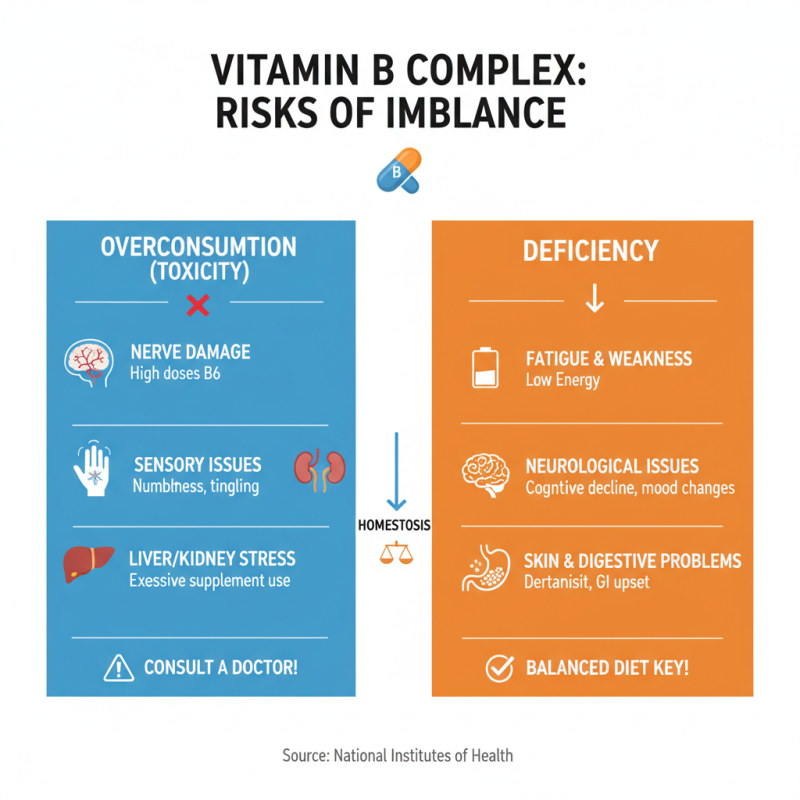
Vitamin B complex plays a vital role in overall health. However, its overconsumption can lead to potential risks. Reports indicate that excess intake of certain B vitamins can result in toxicity. For instance, high doses of vitamin B6 may lead to nerve damage or sensory issues. The National Institutes of Health warns against prolonged use of supplements without professional advice.
On the flip side, deficiency poses serious concerns. A study by the Centers for Disease Control and Prevention (CDC) highlights that vitamin B12 deficiency affects roughly 6% of the U.S. population. Symptoms can include fatigue, weakness, and cognitive issues. Older adults and vegetarians are particularly at risk due to dietary constraints.
Finding the right balance is crucial. Relying solely on supplements may not be the best option. Whole foods provide a range of B vitamins in a more bioavailable form. Reflecting on one’s diet can reveal if they are obtaining enough nutrients naturally or if supplementation is necessary. It’s essential to consult with a healthcare professional before making any significant dietary changes.