2026 Best Vitamin C Coated Suppliers for Global Buyers

Global buyers need more than a supplier directory when sourcing Vitamin C Coated products in 2026. They need evidence, consistency, and clear communication. Coating quality can affect flowability, taste masking, moisture resistance, and manufacturing performance. A polished sample may look impressive. It may not represent every production batch.

This guide examines suppliers through practical purchasing criteria. These include product specifications, coating uniformity, assay results, particle size, residual moisture, and shelf-life data. Reliable suppliers should provide current certificates of analysis, technical data sheets, safety documents, and traceable batch records. Recognized quality systems, qualified laboratories, and documented manufacturing controls also matter. Ask whether production follows applicable GMP principles and whether independent audits are available. Small details reveal much.

Packaging deserves attention too. A sealed bag, clear lot number, and readable expiry date support safer warehouse handling. Buyers should also confirm minimum order quantities, lead times, export documents, pallet conditions, and temperature requirements. Incoterms and payment terms should be written plainly. They should not be guessed from an email.

No supplier list remains perfect forever. Markets change. That is worth remembering. A company with strong references may still struggle during peak demand. Another supplier may have excellent technology but limited export experience. This overview therefore supports due diligence rather than replacing it. Compare recent samples, verify documentation, and request a production-scale trial when possible. The strongest decision combines laboratory evidence, commercial reliability, and honest conversations about limitations. Properties may vary by formulation, coating material, and intended use. Buyers should confirm suitability with their own technical and regulatory teams before placing an order.
2026 Best Vitamin C Coated Suppliers for Global Buyers

What Coated Vitamin C Is and Why Global Buyers Choose It

2026 Best Vitamin C Coated Suppliers for Global Buyers

What Coated Vitamin C Is and Why Global Buyers Choose It

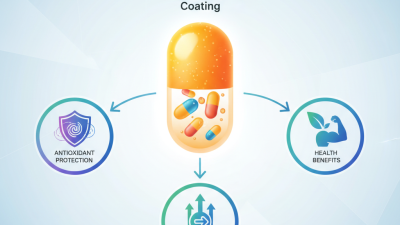
Coated vitamin C is ascorbic acid covered with a thin protective layer. The layer may use lipids, polymers, or other approved food-grade materials. This coating helps reduce direct contact with moisture, air, and unpleasant acidity. It can also improve powder flow during blending and filling.

Global buyers often select coated vitamin C for practical production reasons. A dry powder may remain easier to handle in humid warehouses. The coating can reduce dust and help create more uniform premixes. It may also soften the sharp taste in chewable products and powdered beverages. These benefits matter when shipments cross climates and storage conditions change.

But coating is not a magic shield. Performance depends on the coating material, particle size, storage temperature, and packaging barrier. In procurement work, buyers should request assay results, moisture data, microbiological testing, and heavy-metal specifications. They should also review dissolution behavior in the finished application. A coated ingredient may require different sampling and testing methods. That detail is easy to overlook.

Reliable suppliers should explain coating composition, production controls, batch consistency, and shelf-life evidence. Certificates alone are not enough. Ask for representative samples and compare them under realistic humidity conditions. A supplier may offer excellent laboratory data, yet the powder can behave differently on a fast production line. That gap deserves careful attention.

Key Quality Standards for Evaluating Coated Vitamin C Suppliers

For global buyers, coated vitamin C suppliers should prove more than a high assay number. The Food Chemicals Codex lists ascorbic acid assay at 99.0–100.5% for the uncoated material. Suppliers should show testing before and after coating, using validated HPLC methods. A certificate of analysis should identify the batch, test date, laboratory, and acceptance limits.

Coating performance needs practical evidence. Ask for particle-size data, moisture content, microbial limits, heavy-metal results, and release testing. The report should explain release behavior in water, feed, or the intended food matrix. A clear coating uniformity test matters. Uneven particles can create dusty fines, weak stability, or delayed release.

Small details matter.

Food safety systems also deserve close review. ISO 22000 certification supports documented hazard controls, while HACCP records should cover coating, drying, packaging, and storage. The 2023 ISO Survey recorded 1,265,216 ISO 9001 certificates worldwide, but certification alone does not prove vitamin C quality. That distinction is easy to miss. Request recent audit findings, traceability exercises, allergen statements, and transport-temperature records. Test retained samples independently when the shipment value is high. I would not rely on a polished PDF alone. Some supplier documents remain incomplete, especially for coating composition and stability data.

How to Compare Manufacturing Capacity, Certifications, and Product Safety

Global buyers should compare vitamin C coated suppliers beyond quoted price and sample appearance. Manufacturing capacity must match the expected order, not only the supplier’s maximum claim. Ask for monthly output, current utilization, coating equipment, and backup production lines. A factory producing 20 tons monthly may struggle with a sudden 50-ton order. Request recent production records when possible. Capacity should be proven.

Certifications offer useful evidence, but certificates require careful checking. Confirm the issuing body, expiry date, covered facility, and exact product scope. GMP, HACCP, ISO 22000, and third-party audit reports can support a stronger evaluation. However, paperwork alone does not prove consistent performance. Review batch records, deviation handling, complaint procedures, and worker training. A common mistake is treating every certificate as equal.

Product safety needs practical testing. Request a current certificate of analysis, identity testing, vitamin C assay, microbial limits, heavy metals, pesticide screening, and residual solvent results where relevant. Check coating materials against the destination market’s food and supplement rules. Ask for accelerated stability data, packaging specifications, and recommended storage conditions. Samples should be tested independently before approval. Small details matter.

Some comparisons remain imperfect. Supplier documents may be complete, while factory communication remains slow. That weakness deserves attention. Compare response time, traceability, sample consistency, and willingness to disclose limitations. A reliable supplier should explain failed tests honestly and provide corrective actions, not hide behind polished sales language.

2026 Best Vitamin C Coated Suppliers for Global Buyers - How to Compare Manufacturing Capacity, Certifications, and Product Safety
Reference Supplier Profile Typical Annual Coated Vitamin C Capacity Common Product Formats Manufacturing and Quality Certifications to Require Product Specification Evidence Safety and Contaminant Controls Batch Traceability Recommended Buyer Verification
Specialist coated-ingredient manufacturer Approximately 500–2,000 metric tonnes per year; confirm available capacity by coating line and product grade. Coated ascorbic acid powder, direct-compression grade, granulated vitamin C, and customized particle-size grades. Current GMP certification; ISO 9001; HACCP-based food-safety system; food-safety certification such as FSSC 22000 or equivalent where applicable. Certificate of Analysis for every lot; assay, loss on drying, particle-size distribution, bulk density, flowability, and coating percentage. Risk-based testing for heavy metals, microbiological limits, residual solvents where relevant, pesticides where required, and undeclared allergens. Lot code linked to raw-material lots, processing records, packaging records, laboratory results, and release approval. Request three recent anonymized COAs, a product specification, a process-flow diagram, and a successful traceability exercise.
Large-scale nutrition-ingredient producer Typically above 2,000 metric tonnes per year across multiple vitamin and premix production lines; coated capacity may be a smaller subset. Coated powder, granules, premix components, tablet-grade material, and bulk industrial packs. GMP; ISO 9001; HACCP; FSSC 22000, BRCGS, or another GFSI-recognized certification; documented change-control procedure. Validated assay method, stability data, defined overage policy, particle-size specification, density range, and packaging compatibility data. Supplier approval program for raw materials; foreign-material controls; metal detection or X-ray inspection; environmental monitoring for relevant areas. Electronic or controlled paper records supporting one-step-back and one-step-forward traceability, with documented recall procedures. Check whether the quoted capacity is dedicated to coated vitamin C rather than total site capacity; review audit reports and recent nonconformance records.
Mid-sized custom coating facility Approximately 100–500 metric tonnes per year; generally suitable for regional brands, specialty formulations, and medium-volume contracts. Fat-coated or polymer-coated ascorbic acid, acid-resistant grades, granules, and customized release profiles. GMP and HACCP should be current; ISO 9001 is preferred; verify whether certification scope explicitly includes coating and packing activities. Defined coating-material identity, coating-level tolerance, dissolution or acid-resistance data when claimed, assay after coating, and shelf-life information. Documented allergen assessment; microbiological testing; heavy-metal limits; control of coating-agent residues and cross-contact. Unique lot identification on inner and outer packaging, retained samples, production date, expiry or retest date, and documented batch-release status. Request pilot-batch results and compare them with commercial-batch results before approving a long-term supply agreement.
Pharmaceutical-grade contract manufacturer Capacity varies widely; commonly 50–300 metric tonnes per year for specialized coated grades, subject to validated equipment availability. High-purity coated ascorbic acid, pharmaceutical excipient-compatible grades, capsules, tablets, and controlled particle-size powders. Applicable pharmaceutical GMP; ISO 9001; validated cleaning and process-control systems; regulatory registration or inspection status should be confirmed for the intended market. Pharmacopoeial or agreed in-house specification, identity testing, assay, impurities profile, uniformity data, stability program, and validated analytical methods. Strict microbial control; elemental-impurity assessment; cleaning-validation evidence; controlled access; documented deviation and CAPA systems. Full batch history, equipment status, operator records, laboratory approval, deviation review, and controlled certificate issuance. Confirm that the certification and regulatory scope covers the exact coated product, manufacturing site, and intended application.
Low-volume development and private-label supplier Usually below 100 metric tonnes per year; appropriate for testing, limited launches, and smaller minimum-order quantities. Standard coated powder, sachet-grade material, capsule or tablet input, and made-to-order blends. At minimum, documented GMP and HACCP practices; third-party certification is strongly preferred for international trade. Product specification, representative COA, minimum assay, moisture limit, particle-size range, storage conditions, and packaging configuration. Basic microbiological and heavy-metal testing should be supported by qualified laboratories; allergen and irradiation statements should be available where relevant. Lot number, manufacturing date, expiry or retest date, retained sample policy, and documented complaint-handling process. Evaluate supply continuity, backup manufacturing arrangements, laboratory competence, and the supplier’s ability to maintain identical specifications at higher volumes.
Integrated premix and formulation supplier Often 200–1,000 metric tonnes per year for vitamin C-containing premixes; coated vitamin C may be purchased from qualified upstream sources. Coated vitamin C premixes, mineral-vitamin blends, beverage powders, bakery premixes, and tablet blends. GMP; HACCP; ISO 9001; a GFSI-recognized food-safety certification is preferred for food and beverage applications. Premix homogeneity data, vitamin C assay at release, segregation controls, compatibility information, shelf-life data, and recommended dosage range. Allergen management, cross-contact controls, microbiological testing, heavy-metal assessment, and verification of each critical upstream ingredient. Traceability must cover both the finished premix lot and every vitamin C input lot used in the blend. Determine whether the supplier manufactures the coating itself or resells coated material; audit both the blending site and critical upstream source when necessary.
Capacity figures are procurement reference bands rather than claims about any named company. Buyers should verify current capacity, certification validity, product-specific scope, test methods, and lot-level documentation before approval.

Packaging, Shelf Life, Customization, and International Logistics

2026 Best Vitamin C Coated Suppliers for Global Buyers

Reliable vitamin C coated suppliers should treat packaging as a stability tool, not decoration. Vitamin C can lose potency through oxygen, moisture, heat, and light. I prefer opaque, high-barrier pouches or sealed drums with food-grade liners. Each shipment should show batch number, production date, assay result, and storage conditions. Shelf-life claims need real-time and accelerated stability data. A 24-month claim without supporting testing deserves questions. The Codex General Standard for Food Additives and applicable destination rules should guide formulation and labeling decisions.

Customization may include particle size, coating level, color, flavor, pack weight, private specifications, and pallet configuration. However, more customization can create more testing risk. Ask for certificates of analysis, allergen statements, microbiological results, heavy-metal limits, and packaging migration information. Supplier audits matter. They are not glamorous, but they expose weak document control.

Tips: Request three retained samples from different batches. Store one near normal warehouse conditions. Track odor, color, flowability, and assay changes. Use temperature and humidity indicators for sensitive routes. IATA reported an 11.3% increase in global air-cargo demand in 2024, while UNCTAD’s 2024 maritime review noted continuing trade growth and schedule pressure. Build buffer time into international logistics. My own caution is simple: a cheaper quote can become expensive after relabeling, customs delays, or damaged cartons.

2026 Best Vitamin C Coated Suppliers for Global Buyers

Packaging, shelf life, customization, and international logistics benchmark

The benchmark uses common commercial specification ranges for coated vitamin C ingredients. Shelf-life values refer to typical unopened storage claims, while the other indicators use a five-point buyer assessment scale. Actual performance depends on coating technology, formulation, packaging barrier properties, validation testing, destination regulations, and transport conditions.

A Step-by-Step Guide to Selecting the Right Global Supplier

Selecting the right coated vitamin C supplier starts with a precise technical brief, not a price list. Define vitamin C content, coating material, particle size, moisture limits, packaging, and target markets. Ask for a recent certificate of analysis, batch number, test methods, allergen statement, and stability data. A polished PDF is not proof. Request an independent laboratory report for at least one production lot.

Evaluate production competence through traceability and process questions. Can the supplier track raw materials to each finished drum? How are heat, humidity, and coating uniformity controlled? Review valid quality certifications and their actual scope. Request samples in sealed inner bags. Check flowability, odor, color, and caking after controlled storage. Then run a small pilot under real mixing conditions. It may expose poor dispersion. Keep retain samples.

Global purchasing requires more than factory approval. Verify export documents, product classification with a qualified customs adviser, labeling needs, shelf life, Incoterms, and realistic lead times. Ask how the supplier handles formulation changes, delays, and rejected batches. Score evidence, quality, communication, delivery, and total cost separately. A low quotation may hide weak packaging or expensive inspection work. I once treated fast replies as a reliability signal. That was too simplistic. Delayed answers can reveal gaps, while perfect service can be rehearsed. Record every commitment in signed specifications and purchase terms.