
Top Types of Valganciclovir HCl for Global Buyers?
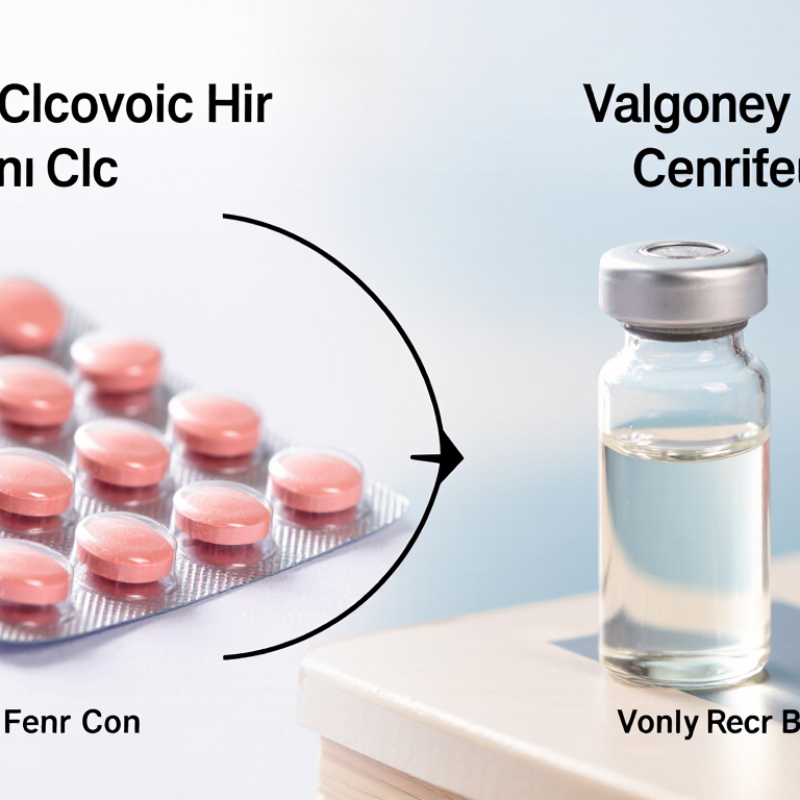
Valganciclovir HCl is not a one-size-fits-all purchase. Global buyers typically compare film-coated tablets with oral solution, then assess brand and generic options, approved strengths, and supplier documentation. The U.S. FDA prescribing information lists 450 mg tablets and an oral solution at 50 mg/mL. These forms serve different practical needs: tablets are straightforward to store and dispense, while liquid dosing can suit patients who cannot swallow tablets. Handling and dosing must follow the product label and qualified clinical guidance.
Market context matters, but broad figures should not be mistaken for drug-specific demand. IQVIA Institute’s 2024 report, The Global Use of Medicines: Outlook to 2028, projects worldwide medicine spending above $2.3 trillion by 2028. It does not provide a standalone Valganciclovir HCl market estimate. For buyers, that distinction is important. A large pharmaceutical market does not prove stable availability of a particular medicine.
Dr. Camille N. Kotton, a specialist in transplant infectious diseases, has emphasized in published CMV guidance that prevention decisions should reflect transplant setting and patient-specific risk. This is a paraphrase, not a verbatim quotation. The practical lesson is clear: compare more than price. Check formulation, concentration, labeling, quality documentation, storage requirements, and continuity of supply. Small details matter. A bottle’s concentration, for example, can affect preparation and administration. This overview introduces the main product types and purchasing considerations, while recognizing that supplier claims and market data may not answer every buyer’s question.
What Valganciclovir HCl Is and How It Is Classified
Valganciclovir hydrochloride, often shortened to valganciclovir HCl, is an antiviral medicine and a prodrug of ganciclovir. After absorption, the body converts it into ganciclovir, which acts against cytomegalovirus (CMV). In pharmaceutical classification, it is generally described as an antiviral nucleoside analogue. It is a prescription medicine, so product selection and use require qualified medical and regulatory oversight.
Tips: Separate the active ingredient from the finished medicine. An API is the pharmaceutical substance used in manufacturing; a finished dosage form is prepared for administration. Check which category a specification describes. Small wording differences can matter.
Finished products are commonly classified by dosage form, such as oral tablets or an oral solution, and by labeled strength. These forms are not automatically interchangeable; formulation, dosing instructions, and patient needs differ. For quality review, buyers may examine identity, assay, impurity profile, dissolution where applicable, stability data, and packaging controls. Requirements vary by market and product specification. A certificate alone is not the whole picture. Independent review of documentation and supplier quality systems can help identify gaps, though no checklist replaces local regulatory assessment.
Top Types of Valganciclovir HCl for Global Buyers? — What Valganciclovir HCl Is and How It Is Classified
Valganciclovir hydrochloride is the hydrochloride salt of valganciclovir, an orally administered prodrug that is converted in the body to ganciclovir, an antiviral medicine. For procurement, it is useful to distinguish the finished dosage forms from the active pharmaceutical ingredient (API).
| Product type | Common strength or concentration | How it is classified | Typical buyer or use context | Key purchasing considerations |
|---|---|---|---|---|
| Film-coated tablet | 450 mg valganciclovir per tablet | Finished oral solid dosage form | Used where an oral tablet is suitable; prescribed uses include treatment of cytomegalovirus (CMV) retinitis in certain patients and prevention of CMV disease in selected transplant recipients. | Confirm that the stated strength is expressed as valganciclovir, and verify the approved product information, packaging, shelf life, and market authorization for the destination country. |
| Powder for oral solution | Typically reconstituted to 50 mg/mL valganciclovir | Finished oral liquid preparation supplied as powder and prepared with a specified diluent before use | May be appropriate when a liquid dosage form is needed, including for patients who cannot use tablets, subject to the applicable product labeling. | Check reconstitution instructions, supplied measuring device, storage conditions after reconstitution, in-use period, and concentration expression on the local label. |
| Valganciclovir hydrochloride API | Bulk active ingredient; no patient-use dosage strength | Pharmaceutical raw material for manufacture of finished dosage forms | Purchased by pharmaceutical manufacturers and qualified contract manufacturing organizations, not generally supplied as a medicine for direct patient use. | Review the applicable API specification, analytical methods, impurity profile, stability data, manufacturing and quality documentation, and import requirements for the destination market. |
Strengths shown for finished medicines are expressed as valganciclovir, as commonly stated in product labeling; they should not be interpreted as the mass of hydrochloride salt alone. Approved forms, indications, labeling, and availability can vary by country. Valganciclovir is a prescription medicine, and dosing and handling should follow the applicable local prescribing information.
Related Posts
-

Valganciclovir Hcl Top 5 Best Suppliers Worldwide?
-

The Future of Methyl Paraben: Emerging Trends and Market Predictions for Global Buyers
-

10 Best Uses of Ethyl Oleate You Should Know?
-
Top Benefits of Ferulic Acid for Skin Health and Anti Aging?
-

The Future of Valaciclovir Hcl in Antiviral Treatment Innovations
-
Best Azelaic Acid Benefits for Skin Optimization?


