
How to Source Doxycycline Hcl from Verified Suppliers?
Sourcing Doxycycline Hcl safely requires more than comparing prices or browsing polished supplier websites. A reliable process examines manufacturing experience, regulatory readiness, batch consistency, and documentation. Buyers should verify the supplier’s legal business identity, manufacturing site, quality certifications, and authorized distribution channels. A polished website proves little.
Each batch should include a clear Certificate of Analysis, test methods, manufacturing date, retest date, lot number, and impurity profile. Check whether the reported assay matches recognized pharmacopeial requirements. Review storage conditions carefully, because moisture, heat, and poor packaging can affect material quality. Supplier traceability also matters. Can the company identify the original manufacturer within minutes?
Dr. Janet Woodcock, a prominent pharmaceutical quality leader, stated, “Quality cannot be tested into products; it must be built into products.” This principle fits Doxycycline Hcl procurement closely. Testing confirms a batch, but strong quality systems protect every batch before release.
A responsible supplier should support technical questions without evasive answers. Ask for audit responses, stability information, change-control procedures, and shipping records. Independent laboratory verification may also be appropriate for higher-risk purchases. It adds time and cost. Still, shortcuts can create larger problems.
No supplier review is perfect. Documents may look complete while important details remain unclear. Buyers should record every verification step and revisit suppliers periodically. This guide explains how to compare evidence, identify warning signs, and build a more dependable sourcing process for Doxycycline Hcl.
Define Doxycycline HCl Specifications and Intended Use
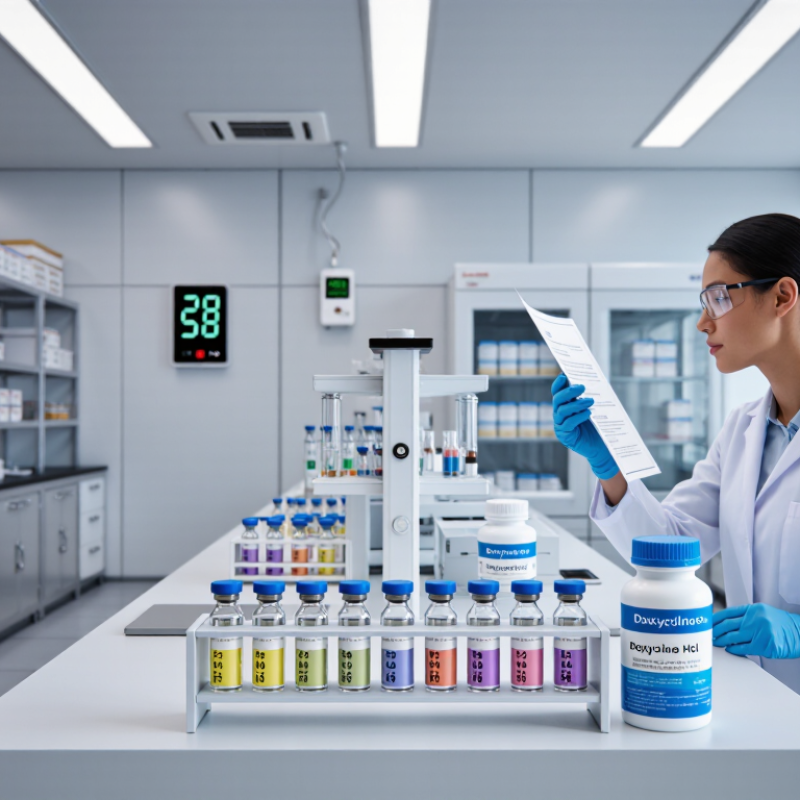
When sourcing Doxycycline HCl, define the intended use before requesting quotations. Human pharmaceutical manufacturing, veterinary production, and analytical testing require different controls. State the dosage form, route, target market, and regulatory destination. Then specify identity, assay, related substances, water content, residual solvents, microbial limits, particle size, and packaging. Doxycycline hydrochloride is not interchangeable with doxycycline hyclate. That distinction matters.
Use the current applicable pharmacopoeial monograph as the baseline, then add risk-based limits. The USP–NF monograph and ICH Q7 support identity testing, impurity control, batch traceability, and GMP manufacture. Request a recent certificate of analysis, chromatograms, residual-solvent results, elemental-impurity data, stability evidence, and change-control history. The Lancet’s Global Burden of Disease 2019 analysis estimated 1.27 million deaths directly linked to bacterial antimicrobial resistance. Quality systems therefore protect more than purchasing budgets. They support responsible antibiotic use.
Before approval, verify the supplier’s manufacturing address, GMP status, audit history, and quality agreement. Compare results from several commercial lots, not one attractive sample. Confirm whether testing is performed internally or by an independent laboratory. Check retest dates, storage conditions, seal integrity, and transport records. Ask for a clear deviation and recall procedure. A low price can hide weak controls. I have seen specifications appear complete while sampling details remained unclear. That is a useful warning, not a minor paperwork issue. Supplier selection should remain evidence-based, documented, and open to review.
| Data Dimension | Specification or Requirement | Recommended Verification Evidence | Sourcing and Use Considerations |
|---|---|---|---|
| Material Identity and Intended Use | |||
| Material name | Doxycycline hydrochloride (Doxycycline HCl) | Product specification, certificate of analysis (CoA), and safety data sheet (SDS) | Confirm that the requested material is Doxycycline HCl and not doxycycline hyclate, doxycycline base, or another tetracycline derivative. |
| CAS Registry Number | 10592-13-9 | Match the CAS number across the quotation, CoA, SDS, label, and shipping documents. | CAS identification should be treated as one identity check; it should not replace structural and analytical confirmation. |
| Molecular formula | C22H25ClN2O8 | Review the supplier’s specification and confirm consistency with analytical data. | Formula and molecular weight may differ for hydrates or solvates, so the solid form must be stated explicitly. |
| Relative molecular mass | Approximately 480.90 g/mol for doxycycline hydrochloride | Check the stated calculation basis and solid-state form. | Do not use the molecular weight of doxycycline hyclate when calculating quantities for Doxycycline HCl. |
| Intended application | Pharmaceutical active ingredient for authorized human or veterinary medicinal products; analytical or research use where legally permitted | Request the intended-use statement, applicable regulatory documents, and customer qualification records. | Use in medicinal products requires compliance with applicable pharmaceutical regulations and an appropriate quality grade. |
| Antibiotic classification | Tetracycline-class antibacterial compound | Confirm identity through validated testing and review the SDS for handling information. | Procurement, storage, handling, and disposal should follow applicable antimicrobial and occupational-safety requirements. |
| Quality and Analytical Requirements | |||
| Assay or potency | Set the acceptance range according to the applicable pharmacopoeial monograph, approved specification, or validated internal standard. | Lot-specific CoA with test method, result, unit, specification limit, and analyst or quality approval. | A numerical assay value without a stated method and specification limit is insufficient for supplier qualification. |
| Identification | Conforms to suitable compendial or validated identification tests, such as chromatographic and spectroscopic comparison where applicable | Request chromatograms, spectra, or a quality summary when permitted by the supplier. | Identity testing should distinguish Doxycycline HCl from related tetracyclines and other doxycycline forms. |
| Related substances and degradation products | Comply with the applicable monograph or approved product specification | Lot-specific chromatographic impurity profile with named or classified impurities and reporting limits. | Doxycycline can undergo degradation; impurity controls should be linked to the material’s storage history and retest period. |
| Water or loss on drying | Acceptance limit defined by the applicable standard and confirmed solid form | Test method, result, sample date, and specification limit on the CoA. | Water content can affect assay calculations, stability, processing, and the distinction between anhydrous and hydrated material. |
| Residual solvents | Complies with applicable permitted daily exposure limits and residual-solvent requirements | Residual-solvent test report using a suitable validated method, when relevant to the manufacturing process. | Limits should be assessed against the intended route of administration and applicable regulatory requirements. |
| Elemental impurities | Risk-based control according to the applicable pharmaceutical quality standard | Risk assessment and, where required, test results for relevant elemental impurities. | Supplier declarations should identify the manufacturing and packaging sources considered in the risk assessment. |
| Microbiological quality | Defined according to dosage form, route of administration, and applicable specification | Microbiological test report or documented justification when testing is not required for the intended use. | Requirements for an oral solid dosage form may differ from those for sterile or non-sterile products. |
| Supplier Verification and Documentation | |||
| Manufacturing-site identity | Full legal name and physical address of the actual manufacturing site recorded in procurement files | Manufacturing-site declaration, quality agreement, audit documentation, or regulatory registration evidence. | Do not rely only on a distributor’s trading name; identify the actual production and release sites. |
| Quality management system | Documented pharmaceutical quality system appropriate to the intended use | Current quality certification, audit report, inspection history, or equivalent qualification evidence. | Certification should be checked for scope, issuing body, validity, and the specific manufacturing site. |
| Good Manufacturing Practice status | GMP evidence where pharmaceutical-grade API is required | Current GMP certificate, inspection documentation, or regulatory database confirmation where available. | GMP expectations depend on jurisdiction and intended use; laboratory or research material may not meet API requirements. |
| Batch-specific CoA | Required before final approval of a batch | CoA showing batch number, manufacturing date, retest or expiry date, test methods, results, and authorized approval. | Compare the CoA with independently tested samples or an approved incoming-quality-control plan. |
| Traceability | Continuous traceability from raw materials and manufacturing batch to shipment and receipt | Batch records or traceability statement, shipping documents, tamper-evident seal information, and chain-of-custody records. | Reject or investigate shipments with mismatched batch numbers, damaged seals, altered labels, or unexplained repacking. |
| Change-control notification | Written notification for changes affecting quality, process, site, specification, packaging, or analytical methods | Quality agreement and documented change-control procedure. | Change notifications support continued qualification of the material and supplier. |
| Regulatory and legal status | Import, export, controlled-distribution, and antimicrobial requirements checked for the destination and origin jurisdictions | Applicable permits, customs classification information, declarations, and regulatory review records. | Legal requirements vary by country and by whether the material is for medicine manufacture, testing, or research. |
| Packaging, Storage, and Logistics | |||
| Packaging configuration | Sealed, labeled, chemically compatible primary container with suitable protective secondary packaging | Packaging specification, label sample, tamper-evidence details, and container-closure information. | Packaging should protect the material from moisture, light, contamination, and physical damage during transport. |
| Label information | Material name, CAS number, batch number, net quantity, storage conditions, manufacturing date, retest or expiry date, and handling warnings | Photograph or approved artwork of the label and reconciliation against the CoA and shipping documents. | All label information should be legible, consistent, and traceable to the supplied batch. |
| Storage conditions | Store according to the supplier’s validated label instructions and stability data; protect from excessive heat, moisture, and light where specified. | SDS, product specification, stability statement, and transport-condition declaration. | Do not infer a universal storage condition from another doxycycline form. Follow the qualified material’s instructions. |
| Retest or expiry period | Must be supported by stability data and stated on the batch documentation | Stability summary, retest policy, and remaining shelf-life commitment at the time of shipment. | Define a minimum remaining shelf-life requirement before purchase order approval. |
| Sampling and incoming inspection | Written sampling plan based on risk, batch size, packaging, and intended use | Sampling SOP, identity-test record, quarantine/release record, and deviation procedure. | At minimum, verify container integrity, label identity, batch traceability, and material identity before release. |
| Supplier Approval Decision Criteria | |||
| Minimum approval status | Approved only after document and sample review | Completed supplier questionnaire, risk assessment, quality review, and documented approval decision. | A supplier should not be considered verified solely because it provides a low price, a website, or a generic CoA. |
| Sample qualification | Representative sample tested against predefined identity and quality criteria | Independent laboratory report or qualified internal test record linked to the exact batch. | Testing should be proportionate to risk and should include identity confirmation before use. |
| Commercial consistency | Quoted material, approved sample, production batch, and delivered material must match | Purchase specification, purchase order, CoA, label, invoice, and shipping documents reconciled by batch. | Any substitution of grade, solid form, manufacturing site, or pack size requires documented review and approval. |
| Recommended procurement record | Maintain supplier qualification, material specification, batch records, test results, correspondence, and deviation history | Controlled electronic or paper quality file with version control and access restrictions. | Records should support recall investigation, complaint handling, audit readiness, and regulatory inspection. |
Related Posts
-

2026 Best Doxycycline Hcl Supplier Options for Global Buyers?
-
How to Source Ethyl Oleate for Your Business Needs?
-

Navigating Import-Export Certifications for Best Tylosin Phosphate: A Comprehensive Guide
-

What is Lauryl Azone Benefits and Uses in Products?
-

Ferulic Acid vs. Other Antioxidants: A Comprehensive Comparison for Skincare Benefits
-

10 Best Uses of Levulinic Acid for Sustainable Applications


