Why is Vitamin B Complex Essential for Your Health?
Vitamin B Complex plays a crucial role in maintaining overall health. These essential nutrients are often overlooked. Many people don't realize their importance until deficiencies arise.
Vitamin B Complex includes several vitamins. These vitamins support energy production, brain function, and red blood cell formation. A lack of these vitamins can lead to fatigue, cognitive issues, and anemia. This is a common issue for those with poor diets.
Daily intake of Vitamin B Complex can impact mood and stress levels. Many experience improvements in their emotional well-being after incorporating these vitamins. Reflecting on one's diet is essential. Are you getting enough Vitamin B Complex?
Functions of Vitamin B Complex in the Human Body
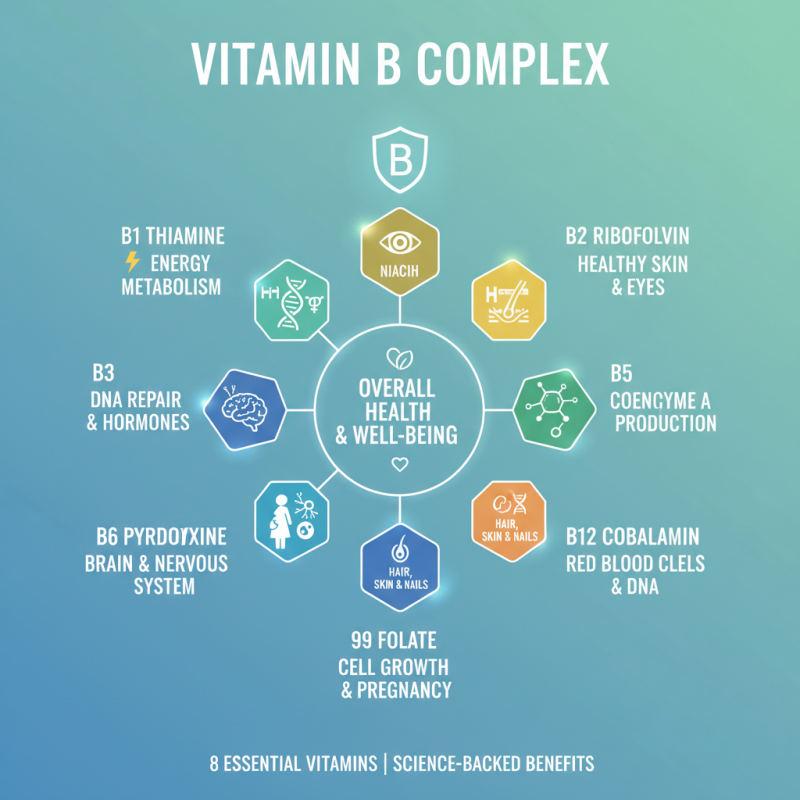
Vitamin B Complex plays a crucial role in maintaining overall health. It consists of eight essential vitamins. Each vitamin has specific functions in the body. For instance, B1 (Thiamine) supports energy metabolism. B2 (Riboflavin) is vital for healthy skin and eyes. B3 (Niacin) aids in DNA repair and hormone production. These functions are backed by studies showing that deficiencies can lead to severe health issues.
Research indicates that about 30% of adults have insufficient B vitamin levels. This is alarming. Low levels can cause fatigue, mood disturbances, and cognitive decline. A study published in the American Journal of Clinical Nutrition states that adequate B vitamin intake helps reduce the risk of depression by up to 50%.
Tips: Incorporate B-complex-rich foods into your diet. Consider leafy greens, legumes, and whole grains. Monitor your energy levels and mood regularly. If you feel persistently tired or moody, reflect on your diet. Enhance your meals with nuts and seeds. Not everyone gets enough from food alone, so assess your needs frequently.
Sources of Vitamin B Complex: Foods and Supplements
Vitamin B complex consists of several essential vitamins that play a crucial role in maintaining overall health. One of the best ways to obtain these vitamins is through a balanced diet. Foods rich in B vitamins include whole grains, leafy greens, meat, eggs, and dairy products. For those who follow a vegetarian or vegan diet, legumes, nuts, seeds, and fortified plant-based foods can help fill the gap.
Supplements can be beneficial for individuals who struggle to meet their nutritional needs through food alone. However, it's important to approach supplementation thoughtfully. Not everyone needs extra vitamins, and excessive intake can lead to adverse effects. Understanding your own body's requirements is key. Some people may find it challenging to assess their dietary choices accurately, leading to potential deficiencies or excesses. Regularly consulting with a healthcare professional can help identify the best path forward.
Eating a variety of foods often leads to better vitamin absorption. Cooking methods can also influence vitamin content in foods. For example, boiling vegetables may cause a loss of some B vitamins. Reflecting on these factors encourages mindfulness about food preparation. Taking an active role in your nutrition could foster a healthier lifestyle.
Why is Vitamin B Complex Essential for Your Health? - Sources of Vitamin B Complex: Foods and Supplements
| Vitamin B Type |
Health Benefits |
Food Sources |
Supplement Form |
| B1 (Thiamine) |
Energy metabolism, nerve function |
Whole grains, pork, legumes |
Thiamine HCl tablets |
| B2 (Riboflavin) |
Antioxidant, energy production |
Dairy products, eggs, leafy greens |
Riboflavin capsules |
| B3 (Niacin) |
Cholesterol regulation, skin health |
Meat, fish, whole grains |
Niacinamide tablets |
| B5 (Pantothenic Acid) |
Hormone production, metabolism |
Avocados, mushrooms, eggs |
Pantothenic acid supplements |
| B6 (Pyridoxine) |
Amino acid metabolism, immune function |
Poultry, fish, potatoes |
Pyridoxine hydrochloride |
| B7 (Biotin) |
Hair, skin, and nail health |
Eggs, nuts, seeds |
Biotin tablets |
| B9 (Folate) |
DNA synthesis, cell division |
Leafy greens, legumes, citrus fruits |
Folic acid supplements |
| B12 (Cobalamin) |
Nerve function, red blood cell formation |
Meat, dairy products, fortified cereals |
Cobalamin injections, tablets |
Signs and Symptoms of Vitamin B Deficiency
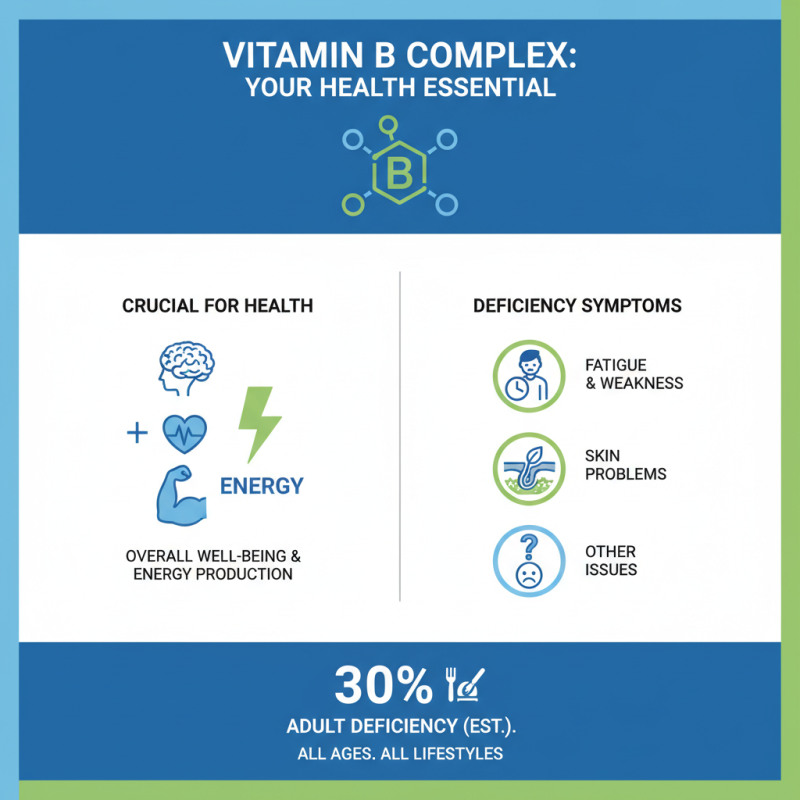
Vitamin B complex plays a crucial role in overall health. Deficiency in any of the B vitamins can lead to undesirable symptoms. This can affect anyone, regardless of age or lifestyle. Common signs of deficiency include fatigue, weakness, and skin problems. Studies estimate that about 30% of adults may get insufficient B vitamins from their diet.
Other symptoms might include mood changes, memory issues, and digestive problems. Vitamin B12 deficiency, for instance, can lead to severe anemia and neurological issues. It is crucial to recognize these signs early. Many people overlook subtle symptoms until they become severe.
Tips: Consider adding more leafy greens and whole grains to your diet. Include foods rich in B vitamins, like beans and nuts. Regularly monitoring your health can help catch deficiencies early. Stay informed about your body's needs and adapt as necessary. Take control of your health—don't take vitamins for granted.
Health Benefits of Adequate Vitamin B Intake
Vitamin B complex plays a crucial role in maintaining overall health. A study from the National Institutes of Health indicates that adequate B vitamin intake is linked to improved energy levels and enhanced brain function. For instance, Vitamin B1 (thiamine) is vital for converting food into energy. A deficiency can lead to fatigue and weakness, impacting daily activities.
Moreover, B vitamins, particularly B6, B9 (folate), and B12, are essential for mental health. Research shows that individuals with higher levels of these vitamins may experience lower rates of depression. Mental clarity often suffers without sufficient B vitamins. Symptoms like confusion and irritability can emerge, affecting work and personal life.
Data from the World Health Organization highlights that over 25% of the world’s population may not meet the daily recommended intake of B vitamins. Many people overlook their dietary sources. This oversight can lead to long-term health issues. Ensuring a balanced diet rich in whole grains, leafy greens, and legumes can help mitigate these risks. Reflecting on dietary habits is essential for overall well-being.
Recommended Daily Allowance and Safety of Vitamin B Complex
Vitamin B Complex plays a vital role in maintaining our health. The group includes several B vitamins, such as B1, B2, B3, B6, B9, and B12. Each of these vitamins contributes to various bodily functions. The recommended daily allowance (RDA) varies based on age, sex, and specific life stages. For instance, adult men typically need about 1.2 mg of B1, while women require around 1.1 mg. Pregnant and breastfeeding women may need increased amounts.
Various studies suggest that adequate intake of these vitamins can enhance energy production and support brain function. For example, a report from the National Institutes of Health indicates that low levels of B12 can lead to cognitive decline. This reinforces the need for careful monitoring of nutrient intake. Some individuals may not get enough from their diets alone.
Tip: Consider including fortified foods or supplements if your diet lacks variety. Regular check-ups can help assess your nutrient levels. It’s good to reflect on your eating habits. Small changes can lead to significant improvements in your health. You're the best judge of your nutritional needs.
Vitamin B Complex Daily Allowance and Sources
The chart above illustrates the Recommended Daily Allowance (RDA) of the various B vitamins essential for maintaining optimal health. Each vitamin plays a critical role in energy production, brain health, and overall metabolism. Ensure to meet the daily requirements for a balanced diet.