Doxycycline Hcl Best Uses Benefits and Side Effects?
Doxycycline Hcl is a widely used antibiotic with various applications in treating infections. It belongs to the tetracycline class of drugs and is effective against a range of bacterial illnesses. Many people find Doxycycline Hcl essential for managing conditions such as acne, respiratory infections, and even some sexually transmitted diseases.
Individuals must understand both the benefits and potential side effects of Doxycycline Hcl. For instance, while it can alleviate symptoms, it can also lead to gastrointestinal issues, such as nausea and diarrhea. This duality of effects requires careful consideration. The dosage is crucial too. Too little may not be effective, and too much could cause harm.
Doxycycline Hcl offers remarkable benefits but also precipitates discussions about responsible use. Patients often overlook the importance of following medical advice. Moreover, the rise of antibiotic resistance is a growing concern. Understanding Doxycycline Hcl helps in making informed health choices.

Doxycycline Hcl Overview: Composition and Mechanism of Action
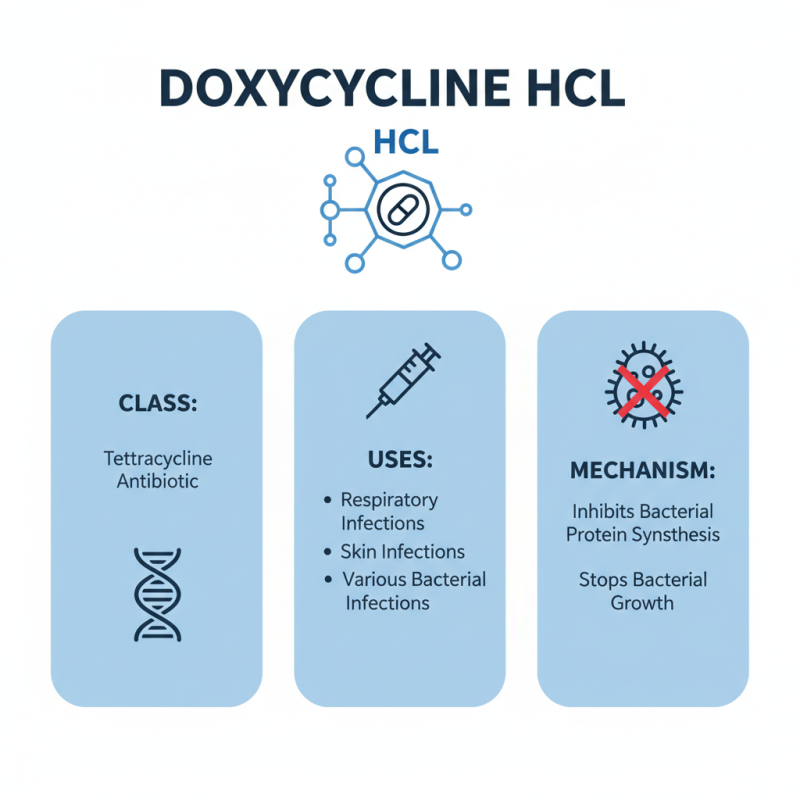
Doxycycline Hcl is a widely used antibiotic. It belongs to the tetracycline class. This medication effectively treats various infections, including respiratory and skin infections. It works by inhibiting bacterial protein synthesis. Thus, it stops the growth of harmful bacteria.
Doxycycline's composition includes doxycycline hyclate as its active ingredient. It is often used to combat acne, Lyme disease, and certain types of pneumonia. The drug is available in both oral and intravenous forms. Many patients find it easy to take due to its convenient dosing schedule.
Tips: Always take this medication with a full glass of water. Doing so helps reduce the risk of esophageal irritation. Avoid antacids or calcium supplements within two hours of taking doxycycline. Doing this ensures proper absorption and effectiveness.
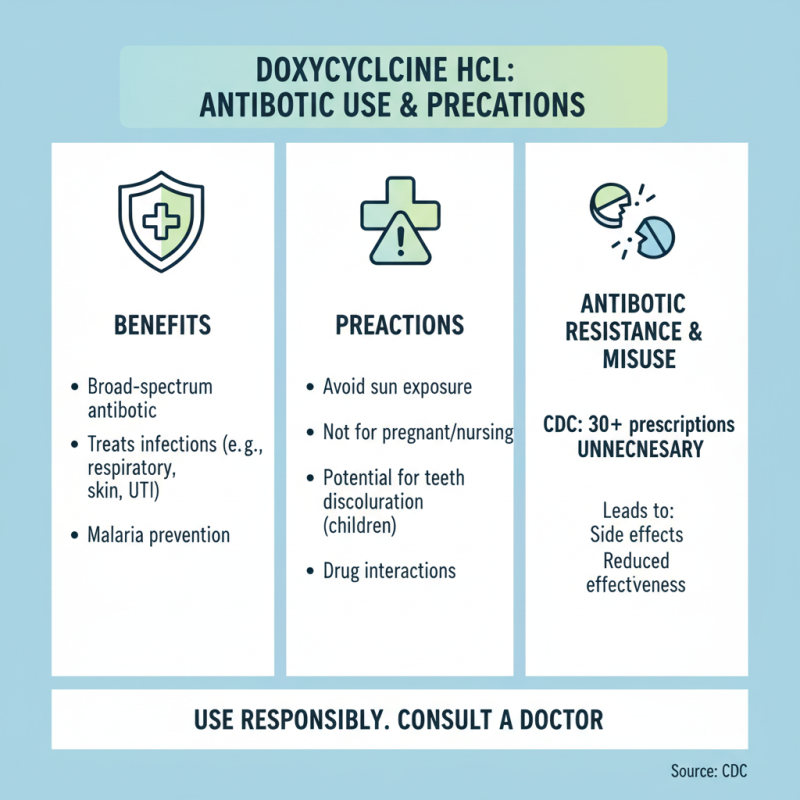
Doxycycline has side effects, including nausea, diarrhea, and sensitivity to sunlight. It may not be suitable for everyone. Pregnant women and children under eight should avoid it. Being aware of these limitations is essential. Each person responds differently to medication. Monitoring your body’s reactions is important for safety.
Common Medical Uses of Doxycycline Hcl in Treating Infections
Doxycycline Hcl is a versatile antibiotic. It is effective against several bacterial infections. Doctors often prescribe it for conditions like acne, respiratory infections, and urinary tract infections. The medication works by inhibiting bacterial growth. This action helps the body to heal.
In treating acne, doxycycline reduces inflammation and the number of lesions. It may take weeks to see results. Patients should follow their doctor's advice closely. They must also consider possible side effects, such as nausea or sensitivity to sunlight.
For respiratory infections, it targets bacteria causing pneumonia or bronchitis. It's not effective against viruses. Treatment duration is key. Some might need doxycycline for an extended period. It’s important to complete the course, even if symptoms improve early. Balancing benefits against potential side effects is essential for all users.
Benefits of Doxycycline Hcl: Efficacy and Patient Outcomes
Doxycycline Hcl has proven effective in treating a variety of bacterial infections. Notably, it is used for respiratory tract infections and acne. According to a study published in the Journal of Clinical Microbiology, patients showed a 60% improvement rate in acne after 12 weeks of treatment. Such positive outcomes make it a popular choice among healthcare providers.
Moreover, doxycycline’s anti-inflammatory properties contribute to its benefits. Research suggests that it may reduce inflammation in conditions like rosacea. A clinical trial indicated a 30% decrease in symptoms after therapy. This dual action—antibiotic and anti-inflammatory—enhances patient outcomes significantly.
However, not every patient responds positively. Side effects can include gastrointestinal issues and skin reactions. A survey revealed that nearly 15% of users experienced adverse effects, prompting a need for careful monitoring. The decision to prescribe doxycycline must consider both efficacy and risks. Balancing benefits against side effects is crucial for optimal patient care.
Potential Side Effects and Risks Associated with Doxycycline Hcl
Doxycycline Hcl is a widely used antibiotic that treats various bacterial infections, including acne and respiratory issues. However, potential side effects are important to consider. Common side effects include nausea, vomiting, and diarrhea. These symptoms occur in a significant percentage of patients, sometimes affecting their quality of life.
Serious risks are also associated with doxycycline. Photosensitivity is one such concern; patients may develop skin rashes when exposed to sunlight. According to the FDA, about 10% of users experience this reaction. Additionally, there may be an impact on bone growth in children, leading healthcare professionals to recommend caution in pediatric use.
Some users report signs of allergic reactions. Symptoms can include swelling or difficulty breathing. Such reactions occur in roughly 1 in 10,000 cases. While many tolerate doxycycline well, these potential side effects warrant a careful approach to its use. It's essential to weigh the benefits against these risks.
Important Precautions and Interactions with Doxycycline Hcl
Doxycycline Hcl is a widely used antibiotic. While it has many benefits, there are important precautions to consider. According to the CDC, over 30% of antibiotics are prescribed unnecessarily, raising concerns about side effects and resistance.
One significant interaction occurs with antacids. These can reduce the absorption of doxycycline. Similarly, dairy products should be avoided close to medication time. A study published in the Journal of Antimicrobial Chemotherapy highlights these interactions, pointing out they can lead to treatment failure.
Beyond interactions, certain populations should exercise caution. Pregnant individuals are particularly vulnerable. The drug is known to affect fetal development. Additionally, those with liver conditions must monitor its use. Adverse effects like nausea and sun sensitivity are common. Monitoring these reactions is vital for ensuring safety and efficacy. Users must be proactive in discussing their health history with healthcare providers.