China has become an important sourcing base for Propylene Glycol, serving buyers across manufacturing, food, pharmaceutical, and personal-care supply chains. Yet “best supplier” is not a simple ranking. A low quotation can look attractive, then freight, documentation, or inconsistent batches change the calculation.
Industry research helps explain the opportunity. Grand View Research and Mordor Intelligence both describe steady global market growth, supported by uses in cosmetics, food, pharmaceuticals, and industrial applications. Their estimates differ because market definitions and forecast periods vary. That difference matters. Buyers should treat market figures as directional evidence, not a purchasing guarantee.
A supplier review should begin with the intended grade and its paperwork. The U.S. FDA lists propylene glycol under 21 CFR 184.1666 for specified food uses; this does not make every product suitable for every application. Ask for a current certificate of analysis, safety data sheet, grade specification, and batch traceability. Then check production consistency, export experience, packaging, lead time, and how the supplier handles complaints. Look closely at a sample drum’s label and seal. Small details count. I would also verify claims independently, since a polished website is not proof of reliable production. This guide examines practical ways global buyers can assess Chinese suppliers and compare offers with fewer surprises. No checklist removes all risk. Good sourcing still takes careful questions.
Propylene glycol is a clear, nearly odorless liquid that attracts moisture and mixes readily with water. Its flexible solvent and moisture-retaining properties make it useful across several industries. Grand View Research’s 2023 market report valued the global propylene glycol market at USD 4.34 billion in 2022. That figure signals broad demand, but it does not tell buyers whether a specific grade suits their process.
In food and personal-care products, propylene glycol can help retain moisture or dissolve ingredients. U.S. regulation 21 CFR 184.1666 lists it as a direct food substance affirmed as GRAS under prescribed conditions. It is also used in pharmaceutical formulations, polyester resins, and heat-transfer fluids. These uses require different specifications. A cosmetic-grade drum should not be assumed suitable for food or industrial applications. One weak point in many purchasing discussions is treating “propylene glycol” as one uniform product. It isn’t.
Tips: Check the application, purity limits, and test documents before ordering. Ask for a recent certificate of analysis, and verify that the stated grade matches your intended use. A label alone is not enough.
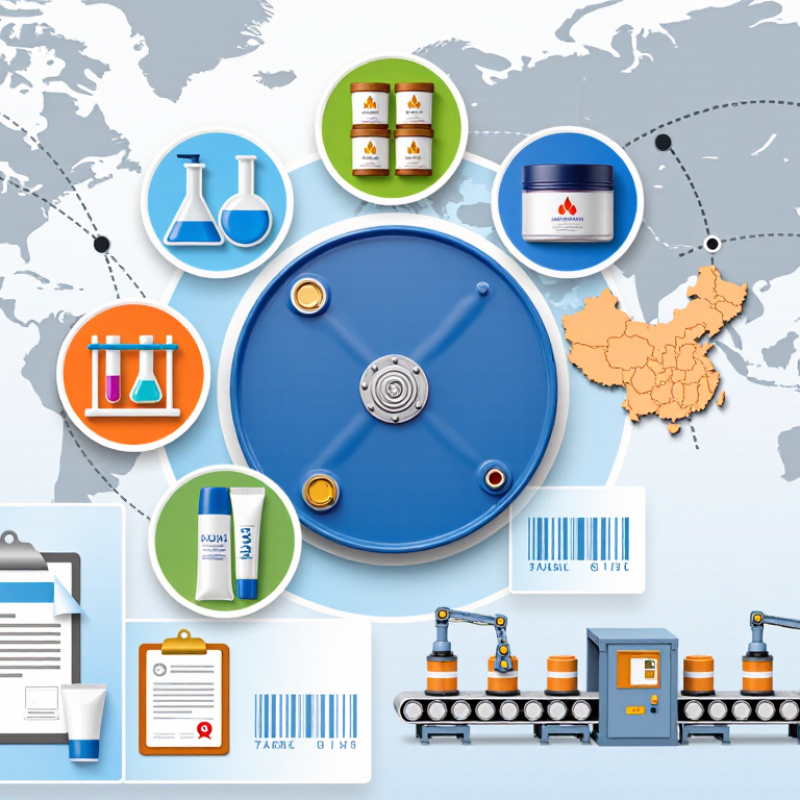
China’s propylene glycol supply chain begins with feedstock and production planning. Many producers use propylene oxide and water in a controlled hydration process. Output depends on feedstock availability, energy costs, plant schedules, and regional demand. These factors can affect both price and delivery time. Supply is not always predictable.
After production, batches are tested for purity, water content, color, and acidity. Buyers should request a current certificate of analysis and confirm that the stated grade matches its intended use. A clear specification matters. One overlooked detail is lot consistency: a sample may meet expectations, while later shipments deserve the same checks. Keep records of results and packaging condition.
The product moves by road, rail, or sea, depending on volume and destination. Bulk tankers suit large orders; drums and intermediate bulk containers can offer more flexible handling. Coastal storage and port access may shorten some routes, but inland transport can add time. Ask suppliers about stock location, lead times, container cleanliness, and export documents before confirming an order. The chain can look simple on paper. It rarely is.
Global buyers should match propylene glycol grade to its intended use, not rely on the grade name alone. Industrial-grade mono propylene glycol may suit heat-transfer fluids and manufacturing processes. Higher-purity grades may be needed for personal-care or food-related applications. Buyers should confirm the relevant grade standard and destination-market requirements before ordering.
Compare the certificate of analysis with your purchase specification. Check assay, water content, acidity, color, specific gravity, and appearance. For example, a clear sample can still miss the required water limit. Ask for batch-specific results and the test methods used. Review the safety data sheet and packaging details, too. Drums and IBCs can affect handling, storage, and delivered cost.
Tips: Share your application, target grade, required limits, packaging preference, and expected volume when requesting a quotation. Ask whether samples are available for evaluation. Specifications sometimes need adjustment after a trial; that is worth allowing for. Don’t treat “high purity” as a complete specification. Confirm each critical limit in writing before shipment.
Choosing a propylene glycol supplier in China takes more than comparing prices. Start by confirming the grade fits your application, such as industrial or food grade. Ask for a current specification sheet and safety data sheet. Request a recent certificate of analysis for the actual batch, not just a sample document. Compare key values, including purity, water content, and acidity, against your own requirements. Details matter. If a supplier gives vague answers about testing or batch traceability, ask for clarification before discussing volume.
Check whether the company manufactures the material or trades it, and ask how it handles quality checks and customer complaints. Verify certificates with the issuing organization where possible; a logo on a PDF is not enough. Request a sample in the proposed packaging and inspect its label, seal, and accompanying records. Before placing a large order, confirm lead time, minimum order quantity, payment terms, and shipping arrangements in writing. A quick, specific response is useful, but it does not prove consistent quality. I would still compare documents carefully, since even a neat file can leave practical questions unanswered.
China can supply propylene glycol at scale, but buyers should verify each lot, not rely on a product brochure. Request a batch-specific certificate of analysis covering assay, water content, acidity, color, and relevant impurities. For pharmaceutical-grade material, the USP–NF monograph specifies an assay range of 99.5–100.5%. Industrial, food, and pharmaceutical grades are not interchangeable. A neat drum proves little.
Check the safety data sheet, label, country of origin, and traceability records before shipment. Confirm that the product’s grade and documentation meet the destination market’s current requirements. WHO/FAO JECFA evaluations list an acceptable daily intake of 0–25 mg/kg body weight for propylene glycol; this toxicological benchmark is not product approval or import clearance. Verify transport classification and packaging against the current SDS and carrier rules. Small paperwork gaps can delay a shipment.
Tip: Match the COA lot number to the drum labels and export documents. Photograph seals at loading, and request a retained sample for disputes. I would still verify the test method; a number without its method is only half the evidence.
0086-15628869272