Ethyl Acetate Best Tips for Global Buyers to Source Effectively
In the global chemical market, sourcing Ethyl Acetate efficiently is crucial for buyers. This solvent, widely used in coatings, adhesives, and flavors, has seen an increase in demand, growing at a CAGR of 4.7% from 2020 to 2025, according to a recent industry report by Grand View Research. High-quality sourcing ensures competitiveness and compliance with safety standards.
Dr. Jane Simmons, a leading expert in organic solvents, emphasizes, “Understanding market dynamics is key for effective sourcing.” Buyers should be aware of fluctuating prices influenced by raw material availability. Moreover, knowing supplier credentials can significantly impact procurement success.
Mistakes in sourcing often arise from inadequate research on suppliers. Many buyers overlook important details, leading to unreliable partnerships. It’s essential to evaluate not just price, but also the quality of Ethyl Acetate and the supplier's reputation. Crafting a strategic sourcing plan can mitigate these risks, enabling a more successful procurement journey.

Understanding Ethyl Acetate: Properties and Applications
Ethyl acetate is a colorless, volatile liquid with a sweet smell. It has a wide range of applications in various industries. Ethyl acetate is primarily used as a solvent in paints, coatings, and adhesives. Its ability to dissolve a variety of chemical compounds makes it invaluable in these sectors. According to a report by Transparency Market Research, the global ethyl acetate market is expected to grow significantly, reaching around $5 billion by 2025. This growth is driven by increasing demand from the coatings industry.
Ethyl acetate also plays a crucial role in food processing and flavoring. It is often used as a flavoring agent in beverages and candies. The Food and Drug Administration (FDA) recognizes ethyl acetate as safe for use in food contact applications. However, sourcing ethyl acetate responsibly is vital. Buyers must focus on quality and purity to ensure product safety. Some suppliers may offer lower-grade materials, which can compromise end products. Buyers should verify supplier certifications and conduct thorough quality checks.
Companies are increasingly focusing on eco-friendly practices. Ethyl acetate can be produced from renewable resources, like acetic acid derived from corn. This points to a more sustainable production method. Despite its benefits, buyers must navigate the complexities of sourcing. Challenges include fluctuating prices and varying quality in global markets. Efficient sourcing strategies can mitigate these risks while ensuring compliance with safety regulations.
Key Markets and Sources for Ethyl Acetate Worldwide
Global buyers looking to source ethyl acetate face various challenges. Understanding key markets is essential. China remains a significant player, providing a large volume of this solvent. However, quality can vary greatly among manufacturers. Buyers should conduct thorough research on potential suppliers, assessing their reliability and production standards.
Europe also presents numerous sourcing opportunities. Countries like Germany and France have established chemical industries. They often offer high-quality products but may come at a higher cost. Buyers should balance quality with budget when selecting suppliers. Engaging with local trade shows can also yield valuable contacts and insights into the market trends.
Emerging markets in Southeast Asia, like Indonesia and Thailand, are gaining traction as reliable sources. These regions often provide competitive pricing. Yet, the trade landscape can be unpredictable. It's important for buyers to stay abreast of economic shifts that may impact sourcing options. Regularly reviewing suppliers and their performance is crucial for maintaining quality and cost-efficiency.
Assessing Quality Standards and Specifications for Ethyl Acetate
When sourcing ethyl acetate, understanding quality standards is crucial. Buyers should recognize that varying grades exist, often influenced by purity levels.
Most applications require a purity of at least 99%. Anything lower may lead to performance issues. Buyers need to request certificates of analysis.
These documents verify the composition.
Additionally, specifications can differ by region. This may affect pricing and availability.
Engaging with suppliers knowledgeable about local regulations can mitigate risks.
It enhances the buyer's understanding of what quality means in specific contexts.
Verifying a supplier's credibility is essential. Many organizations establish their own benchmarks, reflecting their expertise.
However, these practices may not align with global standards. Buyers must remain vigilant.
Reevaluating choices regularly can help ensure that the sourced ethyl acetate meets the necessary criteria for their specific use.
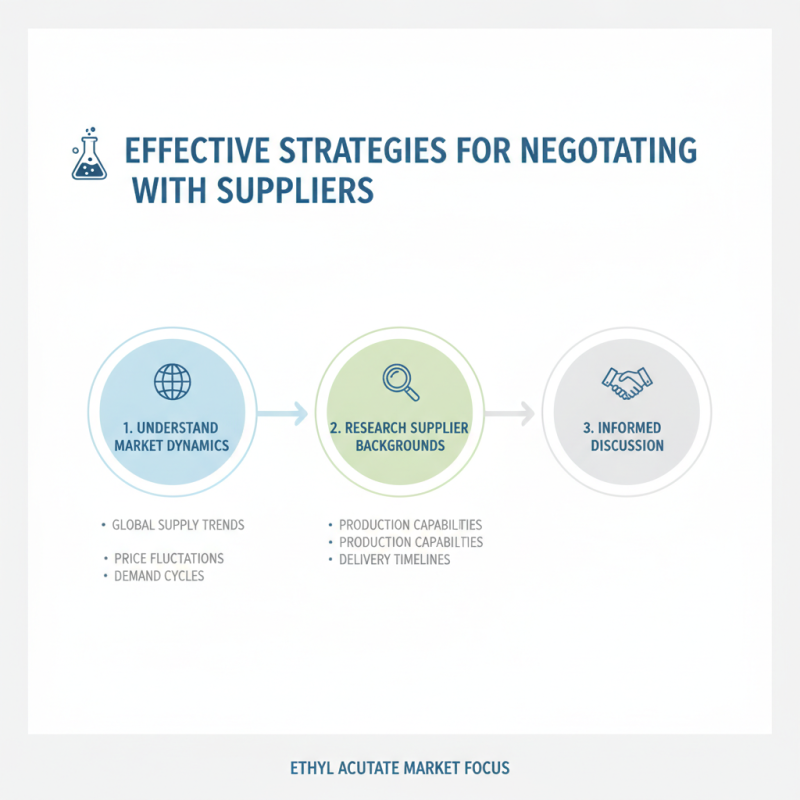
Effective Strategies for Negotiating with Suppliers
Negotiating with suppliers in the ethyl acetate market requires a strategic approach. First, understanding the market dynamics is crucial. Buyers should investigate global supply trends. Knowing the price fluctuations and demand cycles can empower them. A well-informed buyer can engage in meaningful discussions. Research surrounding supplier backgrounds is equally important. This includes their production capabilities and delivery timelines.
Building relationships with suppliers is another key aspect. Open communication fosters trust. Regular check-ins help establish rapport. Face-to-face meetings, if possible, can enhance these connections. However, not all interactions will be smooth. Misunderstandings may arise, leading to potential conflicts. Buyers should stay calm and seek to clarify any issues. Approaching problems with a mindset for collaboration yields better outcomes.
When discussing prices, be prepared to justify your requests. Presenting market insights or competitor prices can offer leverage. However, be cautious not to come off as confrontational. A collaborative tone shows respect and openness. Buyers should also consider flexibility. Sometimes, suppliers may not meet every demand. Finding a middle ground can lead to mutually beneficial agreements. This adaptability could be tested, but it often yields fruitful results.
Logistics and Compliance Considerations for Importing Ethyl Acetate
When importing ethyl acetate, logistics and compliance are critical. Buyers must understand local regulations. Many countries have strict guidelines on hazardous materials. Ethyl acetate, while widely used in industries, falls under such regulations. Knowledge of these rules is essential for seamless importation.
According to a 2022 market analysis from Allied Market Research, global demand for ethyl acetate is expected to rise by 4% annually. This growth highlights the need for efficient logistics strategies. Proper documentation is crucial for customs clearance. Ensure you have safety data sheets and compliance certifications ready.
Unexpected delays can occur during shipping. Seasonal demand fluctuations may impact availability. Buyers should maintain flexible inventory strategies. Regularly review your logistics partners. Reliability can vary significantly across regions. Select suppliers with a proven track record in handling chemicals. This approach mitigates risks associated with delays or compliance issues.
Ethyl Acetate Best Tips for Global Buyers to Source Effectively - Logistics and Compliance Considerations for Importing Ethyl Acetate
| Consideration |
Details |
Best Practices |
| Supplier Qualification |
Evaluate the supplier's production capacity and certifications against industry standards. |
Request samples and audit suppliers periodically. |
| Compliance Regulations |
Understand local and international regulations regarding the importation of solvents. |
Review Material Safety Data Sheets (MSDS) and ensure compliance with REACH and other regulations. |
| Logistics Planning |
Evaluate shipping options and costs for timely delivery. |
Work with experienced logistics partners to streamline the process. |
| Cost Management |
Analyze total landed cost including shipping, tariffs, and local fees. |
Negotiate contracts that optimize pricing and minimize additional costs. |
| Risk Assessment |
Identify potential risks in the supply chain and logistics processes. |
Develop contingency plans to mitigate identified risks. |