10 Best Phytic Acid Manufacturers for Global Buyers

Selecting the right Phytic Acid manufacturer requires more than comparing prices or glossy product pages. Global buyers need evidence, consistency, and practical supply experience.

This introduction examines ten established manufacturers through a buyer-focused lens. It considers purity grades, production capacity, extraction methods, batch testing, packaging, certifications, and export capability. Each supplier should also be assessed against its intended use, including food processing, animal nutrition, cosmetics, and research applications. A suitable product for one sector may perform poorly in another.

Phytate researcher Rainer Schlemmer has emphasized, “Phytate is not simply an antinutrient; its effects depend on context.” That perspective matters. Product value depends on concentration, formulation, processing conditions, and the final application.

Reliable manufacturers should provide current specifications, certificates of analysis, traceability records, and responsive technical support. Look closely at moisture limits, heavy-metal controls, microbiological testing, and shelf-life data. Small details matter.

Supply reliability matters too.

A low quoted price can hide inconsistent batches, unclear origin, or weak documentation. This guide therefore compares commercial strengths alongside potential limitations. Some manufacturers may offer excellent technical quality but limited regional warehousing. Others may provide flexible packaging while lacking strong application support.

That trade-off deserves honest attention. No ranking can replace independent verification, sample testing, and contract review. Buyers should confirm claims directly with each supplier before making a purchase decision. The following overview offers a practical starting point for evaluating Phytic Acid manufacturers in a competitive global market.

10 Best Phytic Acid Manufacturers for Global Buyers

What Is Phytic Acid and Why Is It Used Globally

What Is Phytic Acid and Why Is It Used Globally?

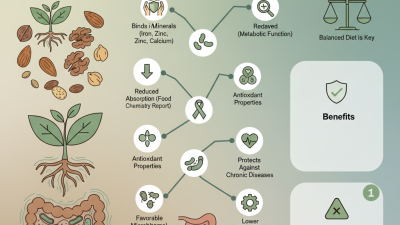
Phytic acid is a naturally occurring compound found in rice bran, corn, wheat, legumes, and oilseeds. Plants store phosphorus in this form. Chemically, it can bind minerals such as iron, zinc, calcium, and magnesium. This property creates both value and caution. In food processing, controlled phytate levels may support antioxidant protection and mineral management. Excessive levels, however, can reduce mineral availability.

Its applications extend beyond food. Manufacturers use phytic acid in mineral supplements, cosmetic formulations, oral-care products, and selected industrial processes. The MarketsandMarkets Food Additives Market report projects growth from about USD 128 billion in 2023 to USD 170.9 billion by 2028. That expansion helps explain rising interest in multifunctional ingredients. Yet phytic acid remains a specialized material, not a universal additive.

Quality decides practical performance. Buyers should verify assay, origin, extraction method, pH, heavy metals, residual solvents, and microbiological limits. Food-grade and cosmetic-grade materials may require different specifications. The FAO notes that phytate-rich crops are important global nutrient sources, especially in cereal-based diets. This makes accurate labeling and dosage control essential. A low price can hide inconsistent concentration. That part is easy to underestimate. Independent laboratory testing, traceable documentation, and stable batch performance offer stronger evidence than promotional claims. Even experienced buyers can overlook matrix effects, because the same ingredient behaves differently in a beverage, cream, or supplement.

Key Criteria for Evaluating Phytic Acid Manufacturers

Evaluating phytic acid manufacturers requires more than comparing quotations. Product identity, concentration, and intended use must match your application. Ask for a current certificate of analysis, specification sheet, safety data sheet, and batch traceability record. Confirm assay results, pH, heavy metals, residual solvents, and microbiological limits. A clear lot number should lead back to production records, not a vague spreadsheet.

The FAO and WHO Joint Expert Committee on Food Additives emphasizes consistent specifications, impurity control, and reliable analytical methods. These principles are useful when screening suppliers. Request the testing method behind each result, such as titration, chromatography, or a validated elemental analysis. Independent laboratory testing adds confidence, especially for high-volume purchases. It also exposes uncomfortable gaps.

Manufacturing controls matter equally. Review audit reports, change-control procedures, complaint handling, and recall readiness. ISO 22000 or equivalent food-safety systems can indicate process discipline, but certification alone proves little. Inspect storage conditions, drum liners, moisture protection, and shipping temperature records. The OECD-FAO Agricultural Outlook 2024–2033 highlights continuing growth in processed-food supply chains, increasing pressure on ingredient consistency. A manufacturer should therefore demonstrate capacity without sacrificing batch uniformity. Ask for three consecutive batch records. One successful sample is not enough. Pricing still matters, but unusually low pricing deserves a technical explanation. My checklist is imperfect; it may overvalue documents and undervalue factory behavior, so an on-site or third-party audit remains worthwhile.

10 Best Phytic Acid Manufacturers for Global Buyers

The 10 Best Phytic Acid Manufacturers for Global Buyers should be judged by evidence, not polished websites. Reliable producers provide clear specifications, recent certificates of analysis, and traceable batch numbers. Buyers should check purity, moisture, pH, heavy-metal limits, and microbiological results before placing a bulk order. Small differences can affect formulation stability and processing performance.

Experienced manufacturers usually support several grades, such as food, cosmetic, and technical applications. Their facilities may follow recognized quality systems, including GMP, HACCP, or ISO-based procedures. Ask about raw-material origins, production controls, filtration methods, and packaging conditions. Light-resistant containers and sealed inner liners can help protect product quality during long transport. Request a sample first.

Communication also reveals operational maturity. A dependable supplier answers technical questions clearly and sends documents without unexplained gaps. Export experience matters because labeling, certificates, and import requirements vary between markets. Still, no ranking is flawless. Production capacity can change, and one excellent batch does not guarantee every future shipment. Buyers should review current audits, test reports, lead times, and complaint procedures before signing a contract. Price deserves attention, but an unusually low quote may hide weaker testing or inconsistent concentration. Reliability costs something.

10 Best Phytic Acid Manufacturers for Global Buyers

Rank Anonymous Manufacturer Profile Primary Product Form Typical Assay Range CAS Number Molecular Formula Approx. Molecular Weight Typical End-Use Grade Common Packaging Options Export-Buyer Strength Recommended Buyer Check
1 Manufacturer Profile 01 Aqueous solution 50–70% phytic acid 83-86-3 C6H18O24P6 660.04 g/mol Industrial and food-processing applications HDPE drums, IBC totes High-volume supply Confirm assay by titration, density, color, and heavy-metal limits.
2 Manufacturer Profile 02 High-purity aqueous solution 50–65% phytic acid 83-86-3 C6H18O24P6 660.04 g/mol Cosmetic, personal-care, and formulation use 25 kg cans, HDPE drums Documentation focused Request specification sheet, SDS, allergen statement, and microbiological limits.
3 Manufacturer Profile 03 Phytic acid powder or salt form 90–98% active material 83-86-3 C6H18O24P6 660.04 g/mol Research, specialty chemicals, and formulation Foil-lined bags, fiber drums Specialty orders Verify moisture, solubility, particle size, and storage stability.
4 Manufacturer Profile 04 Standard aqueous solution 50% phytic acid 83-86-3 C6H18O24P6 660.04 g/mol Metal treatment and surface-processing applications HDPE drums, IBC totes Industrial consistency Check free-acid content, chloride, sulfate, iron, and corrosion-control requirements.
5 Manufacturer Profile 05 Food-grade aqueous solution 50–60% phytic acid 83-86-3 C6H18O24P6 660.04 g/mol Food preservation and antioxidant-support formulations Food-contact compliant HDPE containers Food-use ready Confirm food-contact status, traceability, HACCP controls, and contaminant limits.
6 Manufacturer Profile 06 Cosmetic-grade aqueous solution 40–60% phytic acid 83-86-3 C6H18O24P6 660.04 g/mol Skin-care and professional cosmetic formulations Opaque HDPE drums, small laboratory packs Small-batch flexibility Review cosmetic INCI documentation, preservative controls, and batch-to-batch color variation.
7 Manufacturer Profile 07 Technical-grade solution 45–55% phytic acid 83-86-3 C6H18O24P6 660.04 g/mol Cleaning, chelation, and industrial processing HDPE drums, IBC totes, bulk tankers Cost-efficient logistics Confirm transport classification, compatible materials, and minimum order quantity.
8 Manufacturer Profile 08 Analytical-grade solution Laboratory-specific concentration 83-86-3 C6H18O24P6 660.04 g/mol Laboratory testing and analytical research Amber bottles, sealed laboratory containers Traceable batches Request certificate of analysis, expiry date, reference method, and uncertainty data.
9 Manufacturer Profile 09 Customized concentration solution 30–70% phytic acid 83-86-3 C6H18O24P6 660.04 g/mol Private-label and application-specific formulations Custom drums, IBC totes, sample containers Customization capable Agree on target concentration, viscosity, color specification, and change-control procedures.
10 Manufacturer Profile 10 Stabilized aqueous solution 40–65% phytic acid 83-86-3 C6H18O24P6 660.04 g/mol Long-distance distribution and general industrial use UN-rated HDPE drums, IBC totes Global shipment support Verify shelf life, temperature limits, palletization, and export documentation.

Buyer note: Phytic acid is also known as inositol hexaphosphate and is commonly identified by CAS 83-86-3. Concentration, grade, packaging, and quality limits vary by supplier and application; request a current technical data sheet and certificate of analysis before purchase.

How to Compare Product Quality, Certifications, and Capacity

10 Best Phytic Acid Manufacturers for Global Buyers

Choosing among phytic acid manufacturers requires more than comparing quoted prices. Product quality begins with identity, purity, and consistent batch performance. Ask for a current certificate of analysis for every production lot. Check assay results, moisture, heavy metals, microbiological limits, and residual solvents. The testing method matters. An unexplained “high purity” claim is not evidence. Request a retained sample, then compare its color, solubility, odor, and packaging condition with the specification.

Certifications can reveal how seriously a manufacturer controls risk. Depending on your application and destination, review ISO 9001, GMP, food safety, or relevant quality-management credentials. Confirm the certificate’s scope, issuing body, validity period, and manufacturing site. Do not rely on a logo copied into a sales presentation. A polished certificate can still hide gaps. Supplier audits, traceability records, change-control procedures, and corrective-action reports offer stronger evidence.

Capacity is more than a factory’s annual number. Examine available production lines, minimum order quantities, lead times, storage conditions, and backup plans for raw materials. Ask whether the quoted capacity is dedicated or shared with other products. A small pilot order can expose delays, inconsistent labeling, or weak communication before a larger contract. One common mistake is trusting optimistic delivery promises. I would also request twelve months of batch records, although some suppliers may provide incomplete files. That limitation deserves careful review, not automatic rejection.

How to Choose the Right Supplier for Your Market

Choosing among the ten best phytic acid manufacturers requires more than comparing prices. A supplier should provide clear specifications, consistent assay results, and complete batch documentation. Ask for certificates of analysis, heavy metal testing, microbiological results, and allergen statements. These records help confirm whether the material fits your food, cosmetic, or industrial application.

Check the supplier’s manufacturing experience. Can they explain their extraction or purification process in practical terms? Can they maintain quality across different production lots? Request a sample before signing a large contract. Test its appearance, odor, solubility, acidity, and performance in your own formulation. Small details matter. A sample may perform well, while a later shipment varies slightly.

Your market also determines the right supplier. Confirm that the manufacturer supports the required local standards, labeling rules, packaging formats, and import documents. Export experience is useful, but it does not replace market-specific compliance. Discuss lead times, minimum order quantities, storage conditions, and emergency supply options in writing. A reliable supplier should answer technical questions without vague promises.

Do not rely only on polished websites or low quotations. They can hide weak traceability or unstable capacity. I would also review complaint handling and change-control procedures, although these are often overlooked. One practical concern remains: no supplier is perfect, and even strong documentation cannot predict every formulation problem. A trial order, independent testing, and regular supplier reviews create better protection for global buyers.

10 Best Phytic Acid Manufacturers for Global Buyers: Chemistry-Based Supplier Screening

Before comparing suppliers, buyers should verify that the product identity and assay are consistent with the established chemical profile of phytic acid. The chart shows the calculated elemental composition of phytic acid based on its molecular formula, C6H18O24P6, with a molecular weight of approximately 660.04 g/mol.

Use this reference when reviewing supplier specifications, certificates of analysis, and incoming quality-control results. The values are calculated from the molecular formula and are not company or brand performance data.