For global buyers, selecting Tylosin Phosphate suppliers involves more than comparing prices. Product identity, assay results, batch consistency, packaging, and dependable shipment records all matter. A low quotation is not enough. Buyers should request current certificates of analysis and verify that specifications match the intended veterinary use. Registration requirements and residue limits differ by market, so documentation needs careful review.
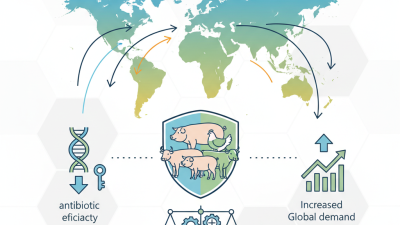
The evidence base also matters. WHO’s 2017 Guidelines on Use of Medically Important Antimicrobials in Food-Producing Animals recommend restricting certain uses to help preserve antimicrobial effectiveness. WOAH’s 2024 report on antimicrobial agents intended for use in animals compiles country-reported data, while the OECD-FAO Agricultural Outlook 2024–2033 provides wider context on livestock production and demand. These sources do not rank suppliers; they help buyers ask better questions. WHO Director-General Dr. Tedros Adhanom Ghebreyesus has described antimicrobial resistance as “one of the top 10 global public health threats facing humanity.” That warning is relevant when assessing responsible sourcing and supplier controls.
This guide to 2026 suppliers focuses on verifiable quality systems, traceability, technical support, and delivery performance. A polished brochure can look reassuring. It may still leave gaps. Ask how batches are tested, how deviations are handled, and which documents accompany each shipment. Supplier claims should be checked against records, not assumed. No single checklist fits every country or buyer, and that limitation deserves attention. The aim is a practical, evidence-led shortlist—not an unsupported promise of universal compliance.

Tylosin phosphate is a veterinary antibiotic supplied as a phosphate salt. It belongs to the macrolide family and has a characteristic 16-membered ring. This structure allows it to bind bacterial 50S ribosomal subunits, slowing protein production. It may act against certain Gram-positive bacteria and mycoplasmas, but susceptibility varies by organism. Small structural details matter.
In veterinary practice, tylosin products may be used for susceptible infections in livestock, subject to approved product labeling and professional direction. The exact indication, species, and dosage are not interchangeable. Buyers should verify the active ingredient, concentration, batch documentation, and storage requirements with qualified suppliers. A neat specification sheet helps, but it cannot replace independent quality checks. That point deserves attention.
Tips: Confirm that the product is tylosin phosphate, not merely a similarly named formulation. Ask for current quality documents, and have a veterinarian assess whether it suits the intended use.
Tylosin is a 16-membered macrolide antibiotic. The chart summarizes selected structural counts for tylosin phosphate: the macrolide ring, three attached sugar residues, one nitrogen atom, and one phosphate moiety. These structural features do not represent supplier rankings, product quality, or veterinary efficacy.
2026 Top Tylosin Phosphate Suppliers for Global Buyers
Global Supplier Landscape: Compare Manufacturers, Export Markets, and GMP Scope
A useful supplier comparison looks beyond quoted price. Check whether the manufacturer’s GMP documentation covers the actual production site and product scope. Request a current specification, representative certificate of analysis, and details on batch traceability. Compare export experience by destination, since document preparation and shipping timelines can vary. Paperwork matters. A polished brochure alone proves little.
Tips: Ask for recent, redacted shipping documents to verify export capability. Confirm expected lead time, packaging options, and how deviations are handled. Then verify the details. Keep intended veterinary use and destination-market requirements in view when assessing suitability.
For tylosin phosphate, compare product consistency indicators, such as assay limits, moisture specifications, and impurity controls. Ask how the supplier manages retained samples and investigates out-of-specification results. A clear answer is more useful than a broad quality promise. No shortlist is perfect. One comparison gap often remains: actual lead-time variation across seasons or shipment routes. Record each supplier’s evidence, not just its claims, and recheck key documents before placing an order.
Scope: This is a region- and supplier-type screening matrix, not a verified ranking or a list of named companies. Manufacturing capability, export authorization, product registration, and GMP coverage must be confirmed for each supplier, product, and manufacturing site.
| Supplier segment | Product and supply scope to confirm | Export-market considerations | GMP and quality evidence to request | Buyer due-diligence priority |
|---|---|---|---|---|
| Origin-country manufacturer Supplier with its own production site |
Confirm that the site produces tylosin phosphate, the intended grade, assay basis, particle characteristics, packaging, and minimum order quantity. Distinguish active ingredient from finished feed premix. | Confirm destination-country registration or import eligibility, permitted use, labeling rules, and any required import permits. Export history alone does not establish authorization in a new market. | Obtain the current site-specific certificate and its scope, manufacturing authorization where applicable, batch CoA, specifications, and audit or inspection information. | Verify the manufacturing address against certificates and batch documents; request a recent representative batch record or quality package under confidentiality if available. |
| Contract or toll manufacturer Production performed for another party |
Identify the actual manufacturing site, the legal manufacturer, the product specification owner, and which party releases each batch. | Check that the exporter, manufacturer, and registration holder are correctly identified in destination-market documents. Confirm change-control arrangements for site or process changes. | Request quality agreements, site-specific GMP evidence, traceability records, deviation and recall procedures, and clarification of testing and batch-release responsibilities. | Assess supply continuity, subcontracting controls, audit access, and prior notification of changes to the manufacturing chain. |
| Feed-premix or formulation supplier Formulates or distributes a finished feed product |
Confirm active concentration, carrier ingredients, homogeneity, stability, intended animal species, directions for use, and whether the supplier manufactures or only repacks the product. | Verify that the specific finished product and use are permitted in the importing jurisdiction. Feed-additive approvals and permitted claims vary by market. | Request applicable feed-safety or manufacturing certificates, product registration evidence, validated mixing controls, contaminant limits, and batch traceability. A feed-safety certificate is not automatically API GMP certification. | Review label compliance, cross-contamination prevention, mixing validation, and the supplier’s procedure for handling product complaints and recalls. |
| Export distributor or trading supplier May source from one or more manufacturers |
Confirm whether the seller holds stock, acts as agent, or purchases against order; identify the original manufacturer and the batch’s chain of custody. | Request destination-specific shipping documents, origin information, import documentation support, and confirmation that the proposed route and product classification are acceptable to the buyer’s authorities. | Assess the manufacturer’s site-level evidence separately from the distributor’s quality-system documents. Check storage conditions, relabeling, repacking, and transport controls. | Require manufacturer disclosure, original batch CoA, sealed packaging or documented repacking controls, and a clear process for recalls and complaints. |
| Evidence category | What to check | Important limitation |
|---|---|---|
| API or pharmaceutical GMP | Verify the issuing authority, site address, validity, covered activities, and whether the certificate or inspection record applies to the relevant product category. | A certificate for a different site, activity, or product category does not establish coverage for the tylosin phosphate batch being purchased. |
| Animal-food or feed manufacturing controls | Check the applicable national rules, facility registration where required, hazard controls, sanitation, traceability, and product-specific permissions. | Feed-manufacturing compliance is not interchangeable with pharmaceutical/API GMP; confirm the standard relevant to the product’s intended use. |
| Feed-safety or quality certification | Check the certificate’s scheme, scope, facility, validity, and whether it covers manufacturing, storage, trading, or another activity. | A general quality or feed-safety certificate does not by itself demonstrate product approval, destination-market registration, or API GMP. |
Recommended comparison fields: quoted grade and specification, manufacturing site, batch size and lead time, MOQ, shelf life and storage conditions, packaging, recent CoA, destination-market status, certificate scope and expiry, audit availability, Incoterms, payment terms, and change-notification commitments.
When qualifying a tylosin phosphate supplier, request certificates of analysis for three consecutive production batches. One passing COA is not evidence of steady process control. Compare assay, identification, moisture, impurity limits, particle-size range, and test methods against the approved product specification. Check that units, acceptance criteria, and analytical methods remain consistent across all three documents. Small differences matter.
The WHO’s 2017 Global Surveillance and Monitoring System report estimated that about 10.5% of medical products in low- and middle-income countries were substandard or falsified. That estimate covers medicines broadly, not tylosin phosphate specifically, but it shows why paper checks need careful review. Ask whether results are actual batch values or only “conforms” statements. Confirm batch numbers, manufacturing dates, retest dates, and authorized quality signatures. Request method details when a value sits close to its limit, and verify that the specification matches the material offered. A mismatch may be clerical, but it still needs resolution. Three COAs can reveal drift; they cannot replace independent qualification or ongoing review.
Reliable sourcing starts with evidence, not a polished certificate. Ask for a batch-specific certificate showing identity, assay basis, moisture correction, and impurity results. Request the validated HPLC method, reference-standard details, and chromatograms when available. A PDF proves little. Independent testing can help confirm a shipment, especially when results sit close to a specification limit. This deserves care: a correct assay alone cannot establish that a product is suitable for every feed use.
Regulatory checks must match the destination country and the intended animal species. Verify the authorized ingredient form, feed concentration, indication, withdrawal period, and any prescription or manufacturing controls in current official registers. The European Medicines Agency’s ESVAC report recorded a 53% decline in veterinary antimicrobial sales across 25 EU/EEA countries from 2011 to 2022. The US FDA’s 2023 sales report found medically important antimicrobial sales for food-producing animals 37% below their 2015 peak. These are market-wide figures, not tylosin-specific evidence. They show why buyers should not treat past import clearance or a supplier’s general compliance statement as proof of current authorization. A gap remains: public sales data cannot verify a specific lot or local feed approval.
Responsible sourcing of tylosin phosphate begins with a wider public-health reality. Murray et al.’s 2022 Lancet analysis estimated 1.27 million deaths were directly attributable to bacterial AMR in 2019. It estimated 4.95 million deaths were associated with AMR. These figures cover bacterial AMR globally, not deaths linked to one medicine or supplier. That distinction matters. For global buyers, a low quote means little without batch-level identity, purity, traceability, and quality records. Ask for current certificates of analysis, change-control procedures, and evidence that complaints are investigated. Paperwork is only a starting point.
WHO guidance on medically important antimicrobials and WOAH prudent-use standards place procurement within veterinary oversight and responsible use. Supplier due diligence can include audited manufacturing controls, secure lot tracking, clear storage instructions, and timely alerts about specification changes. Small details count. A blurred lot code, damaged seal, or unexplained test variation can weaken confidence. Yet checklists can become box-ticking exercises; buyers should verify records and review exceptions, not just collect files. Tylosin-related decisions should follow applicable veterinary direction and approved product information. No sourcing program can promise resistance-free production. Procurement teams can revisit these checks against actual lot records, audit findings, and supplier deviations.
0086-15628869272